
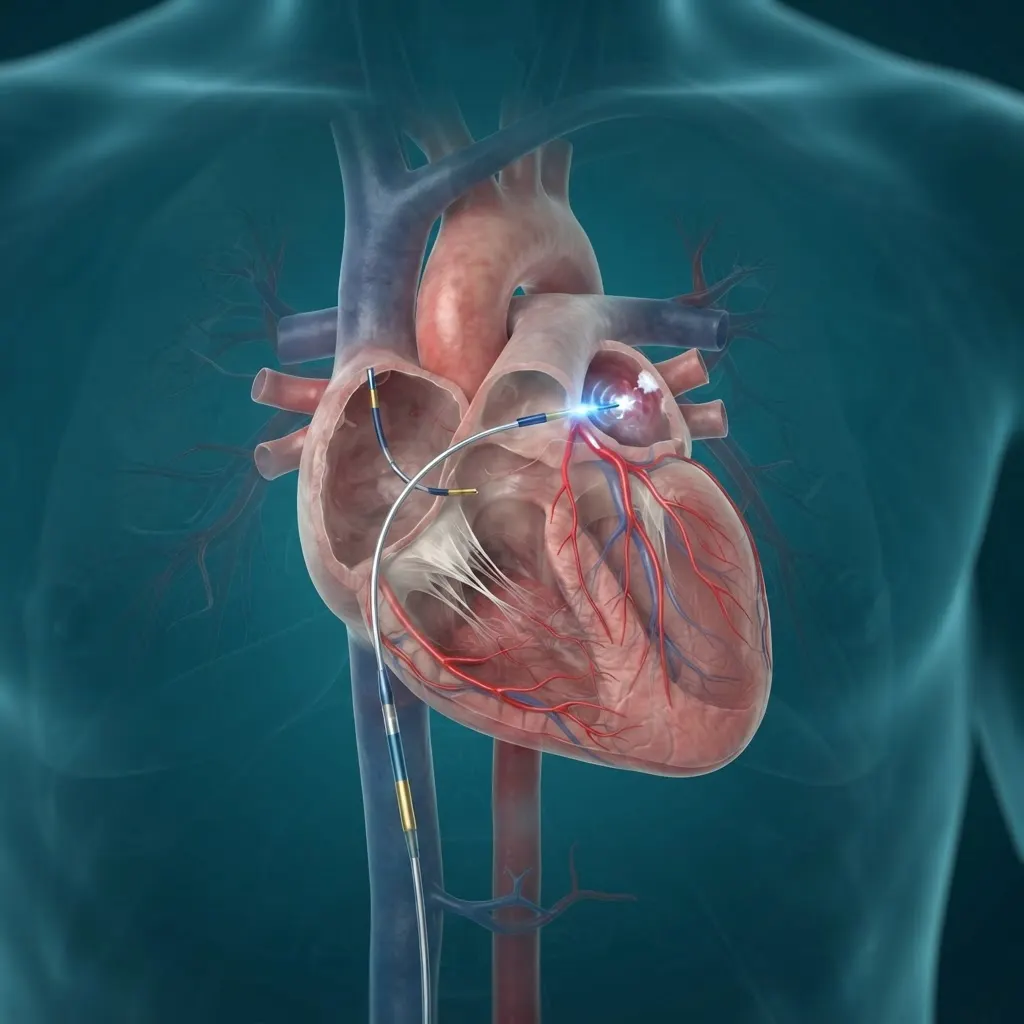
Cardiac Catheter Ablation
Cardiac catheter ablation in India with electrophysiology assessment and rhythm-specific mapping for selected supraventricular, atrial or ventricular arrhythmias.
Related Conditions
Our services are FREE and by using our services your hospital bill does not increase!
About Cardiac Catheter Ablation
Cardiac catheter ablation in India is a minimally invasive electrophysiology procedure used to treat selected abnormal heart rhythms by identifying and eliminating or electrically isolating the tissue responsible for the arrhythmia. It may be used for selected supraventricular tachycardias, atrial flutter, atrial fibrillation and ventricular arrhythmias, but the mapping and ablation strategy differs substantially between rhythm types.
Before treatment, patients undergo an electrophysiology assessment, ECG or rhythm monitoring and echocardiography, with CT, cardiac MRI or other testing added according to the arrhythmia and structural heart disease. During an electrophysiology study, catheters record electrical signals inside the heart. Radiofrequency, cryoablation or other technologies may then be used according to the rhythm and anatomical target.
Potential complications include bleeding or vascular injury, cardiac perforation and tamponade, heart block, thromboembolism and arrhythmia recurrence, with additional rhythm-specific risks for more complex procedures. Severe chest pain, fainting, stroke symptoms or haemodynamic instability requires urgent local assessment.
Cost in India depends on arrhythmia type, 3D mapping complexity, ablation technology and catheters, anaesthesia, hospital stay and whether repeat ablation is required. Major Indian tertiary heart hospitals provide electrophysiologists, advanced mapping systems and cardiac monitoring. Medical Help India can connect international patients with a suitable healthcare partner to review ECG and rhythm records, compare ablation strategies and obtain an individual estimate.
What's Included
Why consider treatment in India?
Access to experienced specialists
Advanced treatment and diagnostic options
More affordable hospital care
Shorter waiting times for treatment
Help comparing hospitals, plans and costs
Support with appointments, travel and follow-up
Cost in India
USDFinal costs depend on the medical assessment, hospital, room category and clinical needs.
How it works
Share your details
Tell us about your health concerns, age and current location.
Receive a call
We call you to discuss your situation, needs and questions.
Receive a treatment plan
Get information about the most suitable treatment plan, hospital and estimated cost.
Choose your plan
Review the options and agree on your care and travel plan.
Get full support
Receive full support throughout every stage of your care journey.
Receive care in India
Receive your planned care with support throughout your stay.
Top Hospitals for Cardiac Catheter Ablation
View All Hospitals →




Top Doctors for Cardiac Catheter Ablation
View All Doctors →
Dr. Vipul Narain Roy
Cardiology · 30+ yrs

Dr. Viney Jetley
Interventional Cardiology & Electrophysiology · 28+ yrs

Dr. Suresh Vijan
Interventional Cardiology · 35+ yrs

Dr. Ripen Gupta
Cardiology, Interventional Cardiology & Electrophysiology · 28+ yrs

Dr. Kajal Ganguly
Cardiology & Interventional Cardiology · 35+ yrs

Dr. Monotosh Panja
Cardiology & Interventional Cardiology · 38+ yrs
Frequently Asked Questions
How much does Cardiac Catheter Ablation cost in India?
Costs depend on the arrhythmia, mapping, ablation technique, anaesthesia and hospital stay. Initial and repeat procedures may differ, so a rhythm-specific plan is needed for an estimate.
Which medical reports are useful to have ready for Cardiac Catheter Ablation?
Have ready: ECG or rhythm recordings, echocardiography, current medicines and prior electrophysiology or ablation reports. Include the diagnosed arrhythmia, symptom pattern and response to earlier treatment.
Which arrhythmias can be treated with catheter ablation?
Depending on the case, ablation may be used for AVNRT, AVRT, atrial flutter, atrial fibrillation, atrial tachycardia and selected ventricular arrhythmias.
How is the abnormal rhythm located?
Electrophysiology testing and 3D mapping can identify the electrical circuit or focus before ablation is performed.
Can an arrhythmia return after ablation?
Yes. Recurrence is possible and depends on the rhythm type, underlying heart disease and procedural result.

Our services are FREE
We connect you with leading hospitals and specialists in India. You pay the hospital directly.