
Cardiac Resynchronization Therapy (CRT)
Cardiac resynchronization therapy in India with heart-failure and electrophysiology assessment for selected patients needing CRT-P or CRT-D device treatment.
Related Conditions
Our services are FREE and by using our services your hospital bill does not increase!
About Cardiac Resynchronization Therapy (CRT)
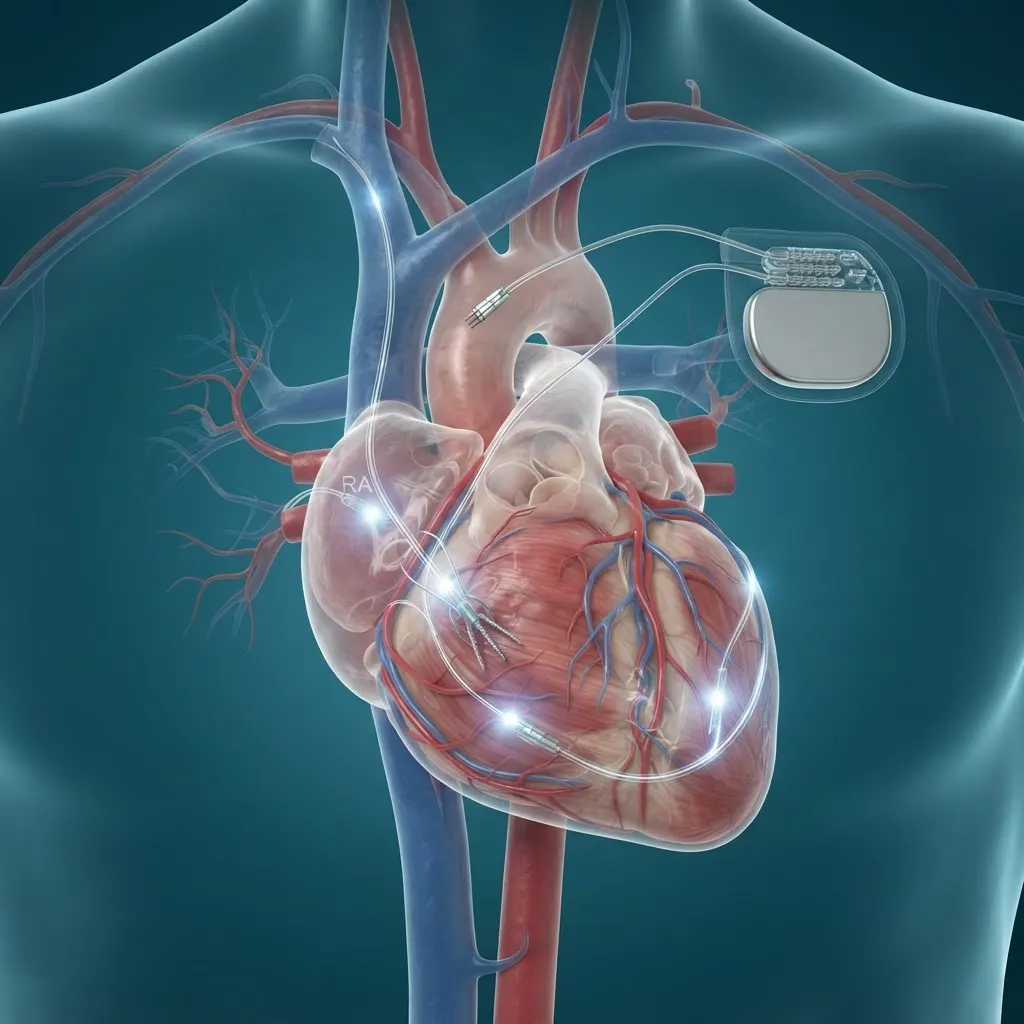
Cardiac resynchronization therapy (CRT) in India uses a specialised pacing system to coordinate contraction of the heart’s ventricles in selected patients with heart failure and electrical conduction delay. CRT may be delivered as CRT-P, which provides pacing, or CRT-D, which also includes defibrillator capability when the patient has an appropriate indication for sudden-cardiac-death protection.
Before implantation, patients undergo a heart-failure and electrophysiology assessment, ECG and echocardiography, with review of symptoms, ejection fraction, QRS duration and morphology, rhythm and response to guideline-directed medical therapy. The team determines whether CRT is likely to improve ventricular coordination and whether defibrillator capability is appropriate.
Implantation usually involves leads positioned in the heart through the venous system, including a lead intended to stimulate the left ventricle. Risks include bleeding, infection, pneumothorax, lead displacement, venous complications and failure to achieve adequate resynchronization, and some patients require lead revision or alternative approaches. Follow-up includes device checks and optimisation alongside ongoing heart-failure treatment.
Cost in India depends on CRT-P versus CRT-D, device brand, leads, implantation complexity, hospital stay and follow-up programming. Major tertiary heart hospitals provide electrophysiology, advanced heart-failure care, echocardiography and device clinics. Medical Help India can connect international patients with a suitable healthcare partner to review ECG and echocardiography, assess CRT eligibility and obtain an individual estimate.
What's Included
Why consider treatment in India?
Access to experienced specialists
Advanced treatment and diagnostic options
More affordable hospital care
Shorter waiting times for treatment
Help comparing hospitals, plans and costs
Support with appointments, travel and follow-up
Cost in India
USDFinal costs depend on the medical assessment, hospital, room category and clinical needs.
How it works
Share your details
Tell us about your health concerns, age and current location.
Receive a call
We call you to discuss your situation, needs and questions.
Receive a treatment plan
Get information about the most suitable treatment plan, hospital and estimated cost.
Choose your plan
Review the options and agree on your care and travel plan.
Get full support
Receive full support throughout every stage of your care journey.
Receive care in India
Receive your planned care with support throughout your stay.
Top Hospitals for Cardiac Resynchronization Therapy (CRT)
View All Hospitals →





Top Doctors for Cardiac Resynchronization Therapy (CRT)
View All Doctors →
Dr. Uttam Kumar Saha
Interventional Cardiology · 35+ yrs

Dr. Sunip Banerjee
Interventional Cardiology · 31+ yrs

Dr. Sunil Wani
Adult Interventional Cardiology · 21+ yrs
Dr. Suresh Vijan
Interventional Cardiology · 35+ yrs

Dr. Soumya Patra
Interventional Cardiology
Dr. Nikhil Kumar
Interventional, Clinical & Preventive Cardiology · 39+ yrs
Frequently Asked Questions
How much does Cardiac Resynchronization Therapy (CRT) cost in India?
Costs depend on CRT-P versus CRT-D, device and leads, initial implantation versus upgrade and follow-up programming. The clinical indication should determine the device before comparing prices.
Which medical reports are useful to have ready for Cardiac Resynchronization Therapy (CRT)?
Have ready: ECG with QRS findings, echocardiography with ejection fraction, current heart-failure treatment and relevant admissions. Include existing device details and interrogation records if an upgrade is considered.
Who may benefit from CRT?
Selected patients with heart failure, reduced ejection fraction and qualifying ECG conduction findings may benefit despite appropriate medical therapy. Eligibility requires review of the full heart-failure and rhythm assessment.
What is the difference between CRT-P and CRT-D?
CRT-P provides resynchronization pacing only, while CRT-D also includes defibrillator capability.
How is response to CRT monitored?
Symptoms, heart-failure status, ECG, device checks and follow-up echocardiography are used to assess response.

Our services are FREE
We connect you with leading hospitals and specialists in India. You pay the hospital directly.