
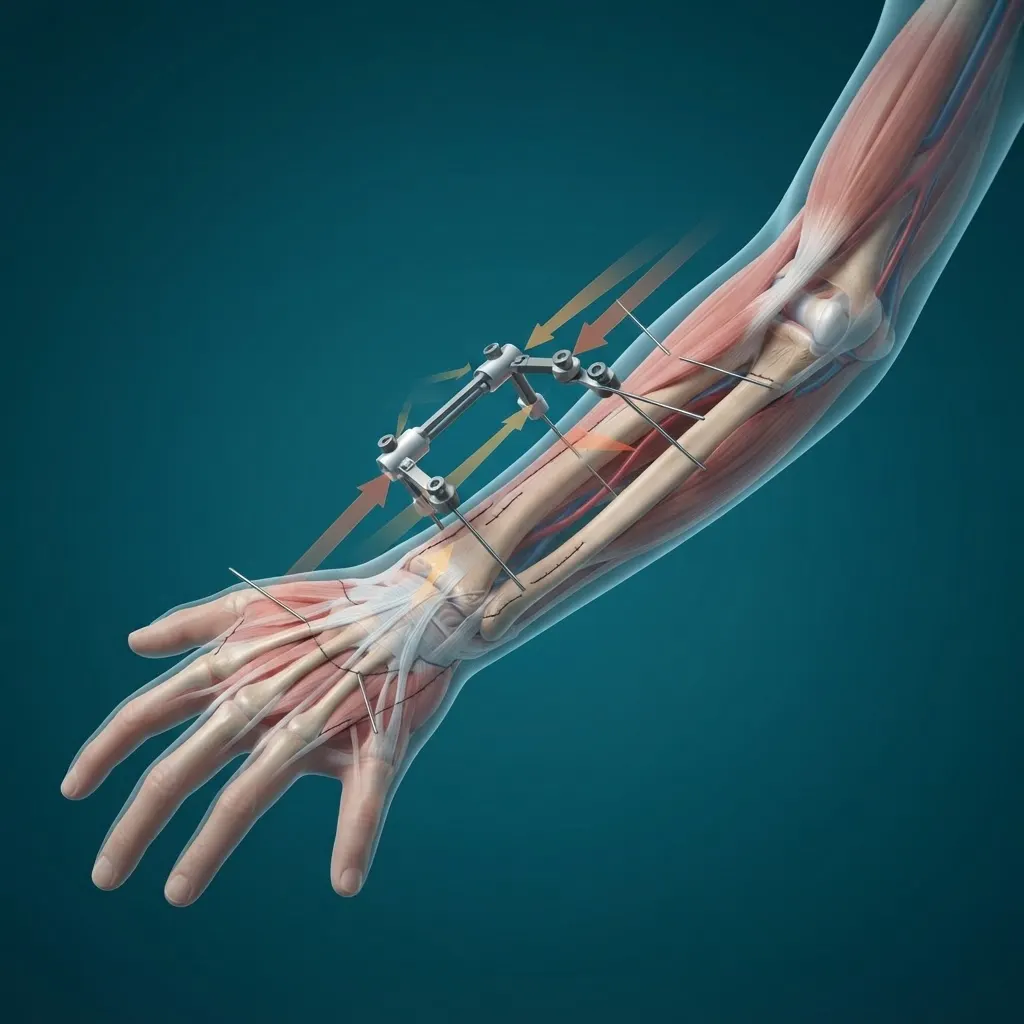
Correction of Congenital Limb Deficiencies
Congenital limb deficiency treatment in India with paediatric orthopaedic assessment, growth planning and individualized reconstruction, lengthening or prosthetic options.
Related Conditions
Our services are FREE and by using our services your hospital bill does not increase!
About Correction of Congenital Limb Deficiencies
Correction of congenital limb deficiencies in India is individualized treatment for children or adults born with absence, shortening, deformity or structural differences of an upper or lower limb. The objective is to improve function, alignment, mobility and limb-length balance rather than simply make both limbs look the same.
Assessment is usually performed by a paediatric orthopaedic or limb-reconstruction specialist and considers age, growth remaining, limb-length discrepancy, joint stability, muscle and nerve function and everyday mobility. Standing radiographs, limb-length measurements and targeted CT or other imaging may be used according to the anatomy. For children, the team also estimates how the discrepancy may change during growth.
Treatment can include observation, physiotherapy, orthoses or prostheses, guided growth, corrective osteotomy, limb lengthening or staged reconstruction. Some complex deficiencies are better managed with a prosthetic strategy rather than repeated reconstruction. Lengthening procedures require prolonged follow-up and carry risks including infection, stiffness, nerve or vessel injury, delayed bone healing, joint problems and recurrent deformity.
Cost in India depends on the diagnosis, number and type of procedures, external or internal lengthening devices, implants, hospital stay, repeated imaging and rehabilitation. Specialist centres can provide paediatric orthopaedics, limb reconstruction, prosthetics and physiotherapy within a coordinated programme.
Medical Help India is a connection platform that can connect international patients and families with an appropriate healthcare partner to review imaging and previous treatment, compare reconstructive and prosthetic options and obtain an individual estimate.
What's Included
Why consider treatment in India?
Access to experienced specialists
Advanced treatment and diagnostic options
More affordable hospital care
Shorter waiting times for treatment
Help comparing hospitals, plans and costs
Support with appointments, travel and follow-up
Cost in India
USDFinal costs depend on the medical assessment, hospital, room category and clinical needs.
How it works
Share your details
Tell us about your health concerns, age and current location.
Receive a call
We call you to discuss your situation, needs and questions.
Receive a treatment plan
Get information about the most suitable treatment plan, hospital and estimated cost.
Choose your plan
Review the options and agree on your care and travel plan.
Get full support
Receive full support throughout every stage of your care journey.
Receive care in India
Receive your planned care with support throughout your stay.
Top Hospitals for Correction of Congenital Limb Deficiencies
View All Hospitals →
Top Doctors for Correction of Congenital Limb Deficiencies
View All Doctors →
Frequently Asked Questions
How much does Correction Of Congenital Limb Deficiencies cost in India?
Cost depends on the limb difference, number and type of reconstruction or lengthening procedures, internal or external devices, prosthetic requirements, repeated imaging and rehabilitation. Growth-related reviews and staged treatment should be considered in the longer-term estimate.
Which medical reports are useful to have ready for Correction Of Congenital Limb Deficiencies?
Have ready: standing limb X-rays and measurements, previous operation reports, prosthetic or orthotic assessments and rehabilitation records. Include age, growth information, joint or nerve findings and the patient's main functional goals.
Can limb lengthening be part of treatment?
Yes, in selected cases, but some patients are better served by reconstruction, guided growth, prosthetic treatment or a combination of approaches.
Why is treatment often staged in children?
Growth changes limb length and alignment over time, so several planned stages may provide safer and more functional correction than one large procedure.
What imaging is usually needed?
Standing X-rays and accurate limb-length and alignment measurements are central to planning, with CT or other imaging used when needed.

Our services are FREE
We connect you with leading hospitals and specialists in India. You pay the hospital directly.