
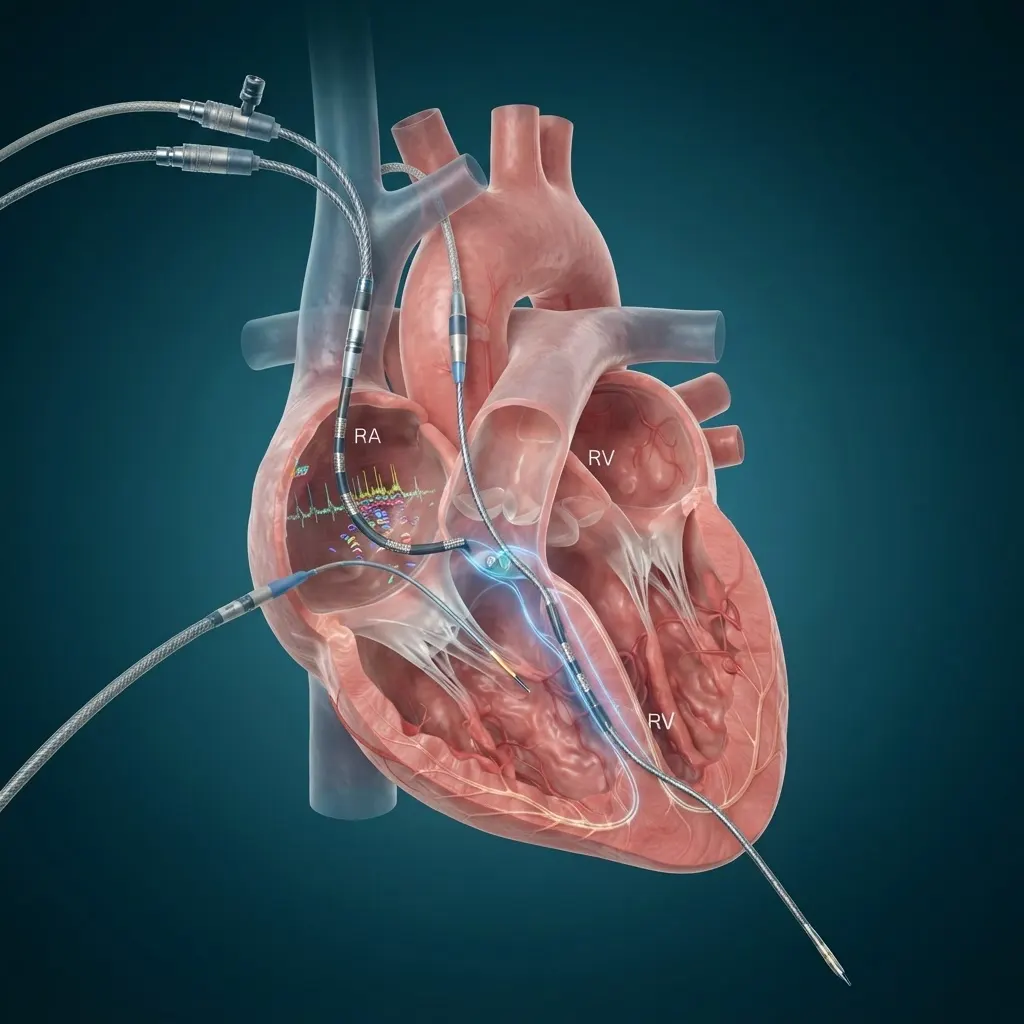
Diagnostic Electrophysiological Study
Diagnostic electrophysiology study in India for selected arrhythmias, using intracardiac recording and programmed stimulation with specialist EP assessment.
Our services are FREE and by using our services your hospital bill does not increase!
About Diagnostic Electrophysiological Study
A diagnostic electrophysiology (EP) study in India is an invasive cardiac test used to define the mechanism and location of selected abnormal heart rhythms. Thin electrode catheters are advanced through blood vessels into the heart, where intracardiac electrical signals are recorded and programmed stimulation is used to assess conduction pathways or reproduce a suspected arrhythmia when appropriate.
An EP study may be considered for selected patients with supraventricular tachycardia, suspected accessory pathways, unexplained wide-complex tachycardia, some ventricular arrhythmias or conduction disorders. Before the procedure, an electrophysiologist reviews ECGs, Holter or event-monitor recordings, medicines, blood tests and echocardiography or other cardiac imaging when indicated. The study is diagnostic, although catheter ablation may sometimes be performed during the same session if a suitable target is identified and ablation has been planned and consented.
Potential risks include bleeding or vascular injury at the catheter site, induced arrhythmia, cardiac perforation and other uncommon catheter-related complications. Fainting with ongoing chest pain, severe breathlessness or a sustained unstable rhythm requires urgent local assessment rather than planned medical travel.
Cost in India depends on whether the study is diagnostic only or combined with ablation, mapping and catheter requirements, sedation or anaesthesia and hospital monitoring. Major cardiac centres in India provide electrophysiologists, EP laboratories, 3D mapping and emergency cardiac support. Medical Help India can connect international patients with an appropriate cardiac healthcare partner to review rhythm recordings, confirm whether an EP study is indicated and obtain an individual hospital estimate.
What's Included
Why consider treatment in India?
Access to experienced specialists
Advanced treatment and diagnostic options
More affordable hospital care
Shorter waiting times for treatment
Help comparing hospitals, plans and costs
Support with appointments, travel and follow-up
Cost in India
USDFinal costs depend on the medical assessment, hospital, room category and clinical needs.
How it works
Share your details
Tell us about your health concerns, age and current location.
Receive a call
We call you to discuss your situation, needs and questions.
Receive a treatment plan
Get information about the most suitable treatment plan, hospital and estimated cost.
Choose your plan
Review the options and agree on your care and travel plan.
Get full support
Receive full support throughout every stage of your care journey.
Receive care in India
Receive your planned care with support throughout your stay.
Top Hospitals for Diagnostic Electrophysiological Study
View All Hospitals →



Top Doctors for Diagnostic Electrophysiological Study
View All Doctors →
Dr. Viney Jetley
Interventional Cardiology & Electrophysiology · 28+ yrs

Dr. Ripen Gupta
Cardiology, Interventional Cardiology & Electrophysiology · 28+ yrs

Dr. Monotosh Panja
Cardiology & Interventional Cardiology · 38+ yrs
Dr. Balbir Singh
Cardiology, Interventional Cardiology & Cardiac Electrophysiology · 35+ yrs

Dr. Aparna Jaswal
Cardiac Electrophysiology & Pacing · 19+ yrs

Dr. Ashfaque Ahmed
Cardiology & Interventional Cardiology · 15+ yrs
Frequently Asked Questions
How much does Diagnostic Electrophysiological Study cost in India?
Costs depend on whether the procedure is diagnostic only or combined with catheter ablation, the mapping and catheter requirements, sedation or anaesthesia and hospital monitoring. A useful estimate should clearly separate diagnostic EP study charges from any planned ablation.
Which medical reports are useful to have ready for Diagnostic Electrophysiological Study?
Have ready: ECGs documenting the rhythm, Holter or event-monitor recordings, echocardiography, cardiology or electrophysiology reports and current medicines. Include previous ablation or device records and a description of palpitations, fainting or other relevant symptoms.
What can an electrophysiology study diagnose?
An EP study can help define the mechanism and location of selected arrhythmias, including some supraventricular tachycardias, accessory pathways, ventricular arrhythmias and conduction disorders.
Is an EP study the same as catheter ablation?
No. An EP study is diagnostic. If a treatable arrhythmia target is identified, catheter ablation may sometimes be performed in the same session when it has been planned and consented.
What records are useful before an EP study?
ECGs showing the arrhythmia, Holter or event-monitor recordings, medication history, echocardiography and previous cardiology reports are particularly useful for electrophysiology review.

Our services are FREE
We connect you with leading hospitals and specialists in India. You pay the hospital directly.