
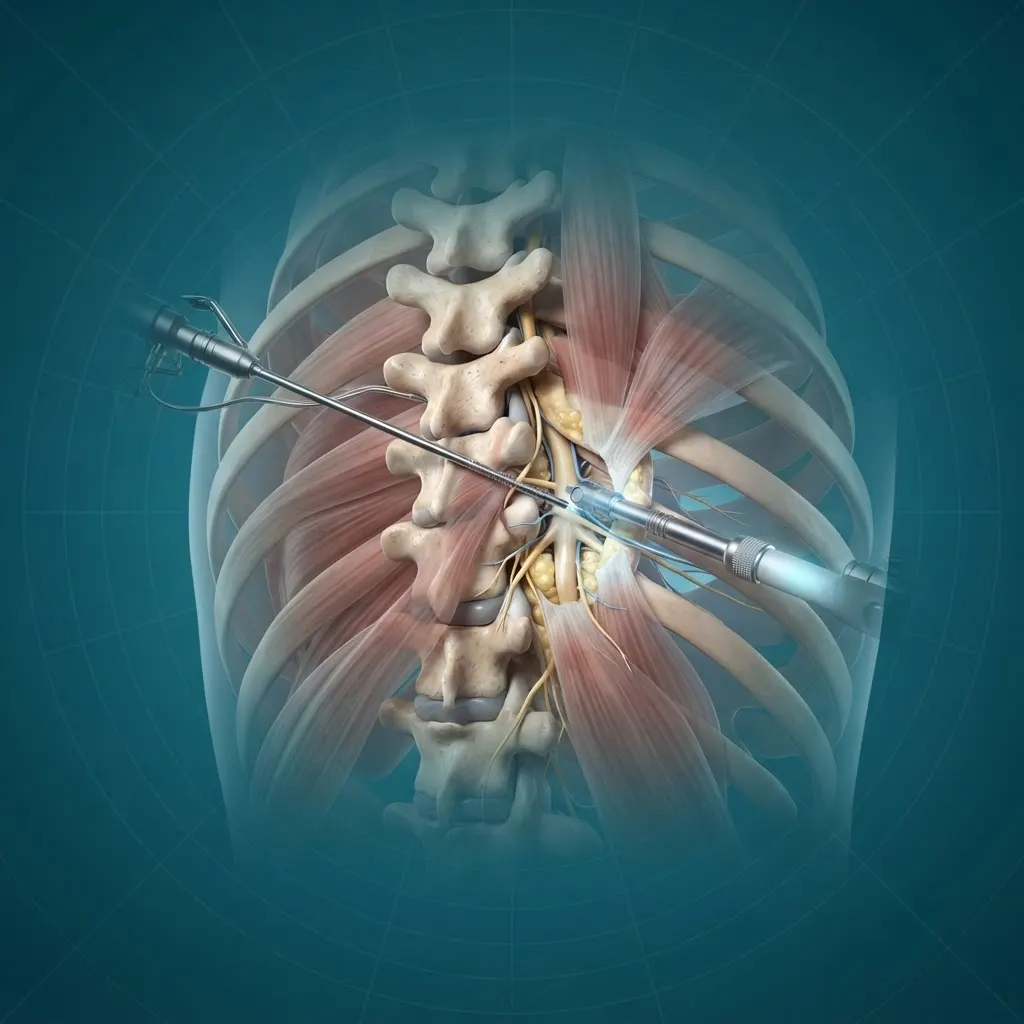
Endoscopic Thoracic Decompression
Endoscopic thoracic decompression in India for selected thoracic cord or nerve compression, with MRI/CT planning, specialist spine assessment and neuromonitoring when indicated.
Related Conditions
Our services are FREE and by using our services your hospital bill does not increase!
About Endoscopic Thoracic Decompression
Endoscopic thoracic decompression in India is a minimally invasive spine procedure used in carefully selected patients with focal thoracic spinal-cord or nerve-root compression. Potential indications include selected thoracic disc herniations and stenotic lesions, but the thoracic canal contains the spinal cord and offers limited space, so precise diagnosis and experienced case selection are especially important.
Assessment generally includes a detailed neurological examination and thoracic MRI, with CT when calcified disc material, ossification or complex bony anatomy is suspected. The spine surgeon reviews the level and direction of compression, cord signal change, alignment, instability and whether the pathology can be reached safely through an endoscopic corridor. Extensive multilevel disease, major deformity, severe instability or difficult ventral/calcified compression may require another minimally invasive or open approach instead.
Potential complications include dural tear and CSF leak, bleeding, infection, residual or recurrent compression and neurological injury. New or rapidly worsening leg weakness, difficulty walking, bowel or bladder dysfunction or saddle/perineal numbness requires urgent local medical assessment and should not be delayed for international travel. Rehabilitation and recovery depend on preoperative neurological status and the cause and duration of cord compression.
Cost in India depends on the number of levels, endoscopic equipment and disposables, intraoperative neuromonitoring, anaesthesia, operating time, hospital stay and rehabilitation. Tertiary spine centres may provide neurosurgical and orthopaedic spine teams, MRI/CT planning, endoscopic systems, neuromonitoring and neurocritical-care support.
Medical Help India is a connection platform and can connect medically stable international patients with an appropriate spine healthcare partner to review MRI/CT scans, compare endoscopic and alternative decompression strategies and provide an individual hospital estimate.
What's Included
Why consider treatment in India?
Access to experienced specialists
Advanced treatment and diagnostic options
More affordable hospital care
Shorter waiting times for treatment
Help comparing hospitals, plans and costs
Support with appointments, travel and follow-up
Cost in India
USDFinal costs depend on the medical assessment, hospital, room category and clinical needs.
How it works
Share your details
Tell us about your health concerns, age and current location.
Receive a call
We call you to discuss your situation, needs and questions.
Receive a treatment plan
Get information about the most suitable treatment plan, hospital and estimated cost.
Choose your plan
Review the options and agree on your care and travel plan.
Get full support
Receive full support throughout every stage of your care journey.
Receive care in India
Receive your planned care with support throughout your stay.
Top Hospitals for Endoscopic Thoracic Decompression
View All Hospitals →
Top Doctors for Endoscopic Thoracic Decompression
View All Doctors →
Frequently Asked Questions
How much does Endoscopic Thoracic Decompression cost in India?
Cost depends on the thoracic level and number of levels, endoscopic equipment and disposables, intraoperative neuromonitoring, anaesthesia, operating time, hospital stay and rehabilitation. Complex calcified or multilevel compression requiring another surgical approach has a different estimate.
Which medical reports are useful to have ready for Endoscopic Thoracic Decompression?
Have ready: recent thoracic MRI images and report, CT when already performed for calcification, ossification or bony anatomy, neurological findings and previous spine-operation records. Include walking ability, leg weakness or numbness and any bowel or bladder changes; rapidly progressive neurological symptoms require urgent local assessment.
Why is thoracic decompression more specialised?
The thoracic spinal canal contains the spinal cord and can be relatively narrow, so decompression requires careful imaging and surgical planning.
What conditions may be treated endoscopically in the thoracic spine?
Selected thoracic disc herniations or focal stenotic lesions may be suitable, but extensive or complex disease may need another approach.
What imaging is used before thoracic decompression?
Thoracic MRI is central, with CT added when calcification, ossification or complex bone anatomy is suspected.
Our services are FREE
We connect you with leading hospitals and specialists in India. You pay the hospital directly.