
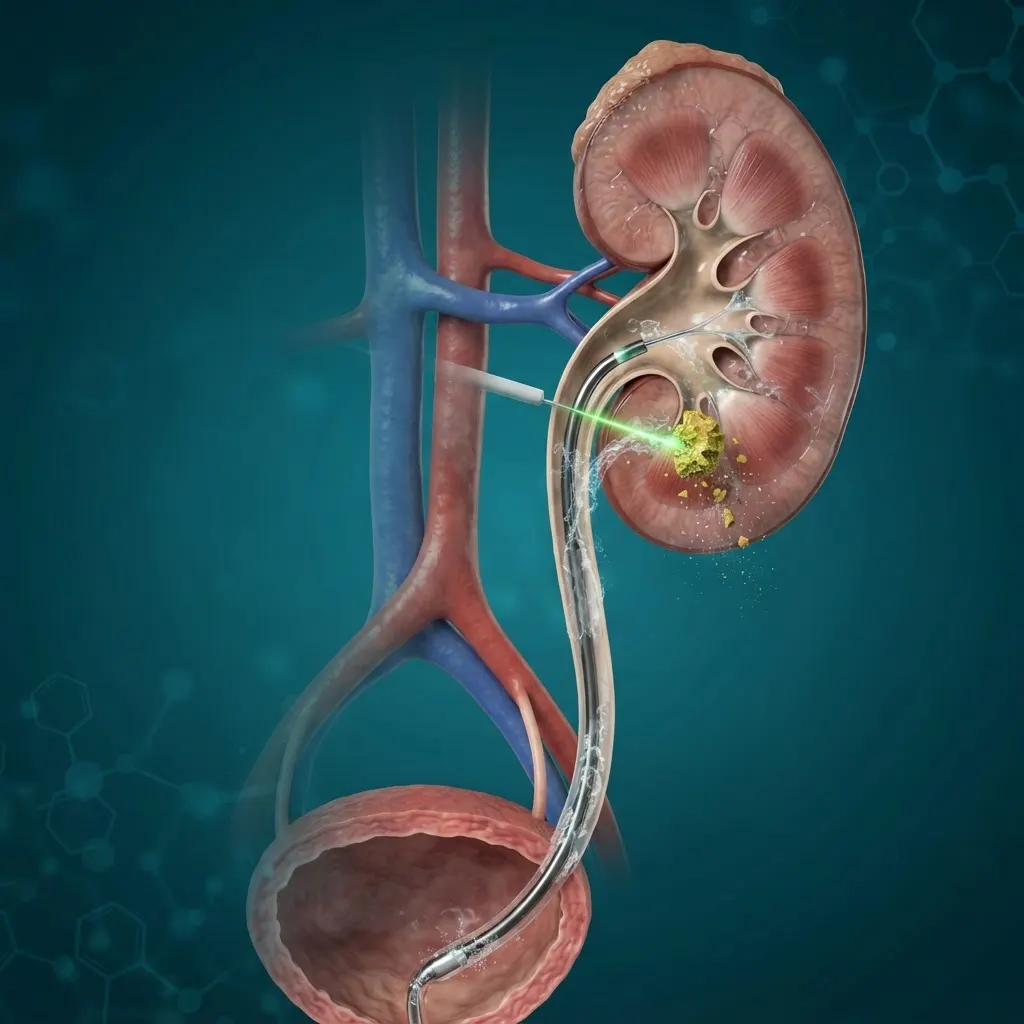
Endoscopic Urinary Stone Surgery
Endoscopic urinary stone surgery in India using ureteroscopy or RIRS with laser lithotripsy, imaging-based planning and specialist endourology care for selected stones.
Related Conditions
Our services are FREE and by using our services your hospital bill does not increase!
About Endoscopic Urinary Stone Surgery
Endoscopic urinary stone surgery in India treats selected kidney and ureteric stones using instruments passed through the urinary tract rather than a conventional open incision. Depending on stone location, size and anatomy, treatment may involve ureteroscopy or retrograde intrarenal surgery (RIRS), commonly using laser lithotripsy to fragment stones and baskets to retrieve selected fragments.
Before intervention, the urologist reviews non-contrast CT or other appropriate imaging, stone burden and location, kidney function, urinalysis/urine culture, anticoagulant use and infection risk. Active urinary infection generally requires treatment before elective stone surgery. A temporary ureteric stent may be required before or after the procedure for drainage, access or healing. Larger, complex or staghorn renal stones may be better suited to percutaneous nephrolithotomy (PCNL), while selected stones may be managed with shock-wave lithotripsy or observation.
Potential complications include urinary infection or sepsis, bleeding, ureteric injury, residual fragments, postoperative pain and the need for staged treatment or later stent removal. Fever or rigors with an obstructed urinary system, severe illness or reduced urine output can represent an emergency requiring urgent drainage and antibiotics; elective international travel should not delay emergency care.
Cost in India depends on stone burden and location, ureteroscopy versus RIRS, laser and disposable equipment, stent use, anaesthesia, hospital stay and whether staged procedures are needed. Tertiary urology centres may provide endourologists, modern laser systems, fluoroscopy, PCNL and emergency urinary drainage.
Medical Help India is a connection platform and can connect medically stable international patients with an appropriate urology healthcare partner to review scans and laboratory results, compare stone-treatment options and provide an individual hospital estimate.
What's Included
Why consider treatment in India?
Access to experienced specialists
Advanced treatment and diagnostic options
More affordable hospital care
Shorter waiting times for treatment
Help comparing hospitals, plans and costs
Support with appointments, travel and follow-up
Cost in India
USDFinal costs depend on the medical assessment, hospital, room category and clinical needs.
How it works
Share your details
Tell us about your health concerns, age and current location.
Receive a call
We call you to discuss your situation, needs and questions.
Receive a treatment plan
Get information about the most suitable treatment plan, hospital and estimated cost.
Choose your plan
Review the options and agree on your care and travel plan.
Get full support
Receive full support throughout every stage of your care journey.
Receive care in India
Receive your planned care with support throughout your stay.
Top Hospitals for Endoscopic Urinary Stone Surgery
View All Hospitals →

Top Doctors for Endoscopic Urinary Stone Surgery
View All Doctors →

Frequently Asked Questions
How much does Endoscopic Urinary Stone Surgery cost in India?
Cost depends on stone size, number and location, ureteroscopy versus RIRS, laser and disposable equipment, access sheath or ureteric stent, anaesthesia, hospital stay and whether staged treatment is required. PCNL or emergency drainage should be estimated separately when clinically indicated.
Which medical reports are useful to have ready for Endoscopic Urinary Stone Surgery?
Have ready: non-contrast CT or other urinary-tract imaging with reports, urine culture or urinalysis, kidney-function results and urology notes. Include previous stone procedures, stent or nephrostomy records, anticoagulant medicines and any recent fever, rigors or urinary obstruction; infected obstruction requires urgent local care.
Which stones can be treated endoscopically?
Ureteroscopy or RIRS can treat many ureteric and selected kidney stones, but the best approach depends on stone size, location, anatomy and infection status.
Will I need a ureteric stent after stone surgery?
A temporary stent is used in selected cases to maintain drainage or support healing. The urologist should explain whether it is needed and when it should be removed.
When might PCNL be preferred instead?
PCNL is often considered for larger or complex renal stone burdens where an endoscopic retrograde approach may require multiple procedures or be less effective.

Our services are FREE
We connect you with leading hospitals and specialists in India. You pay the hospital directly.