
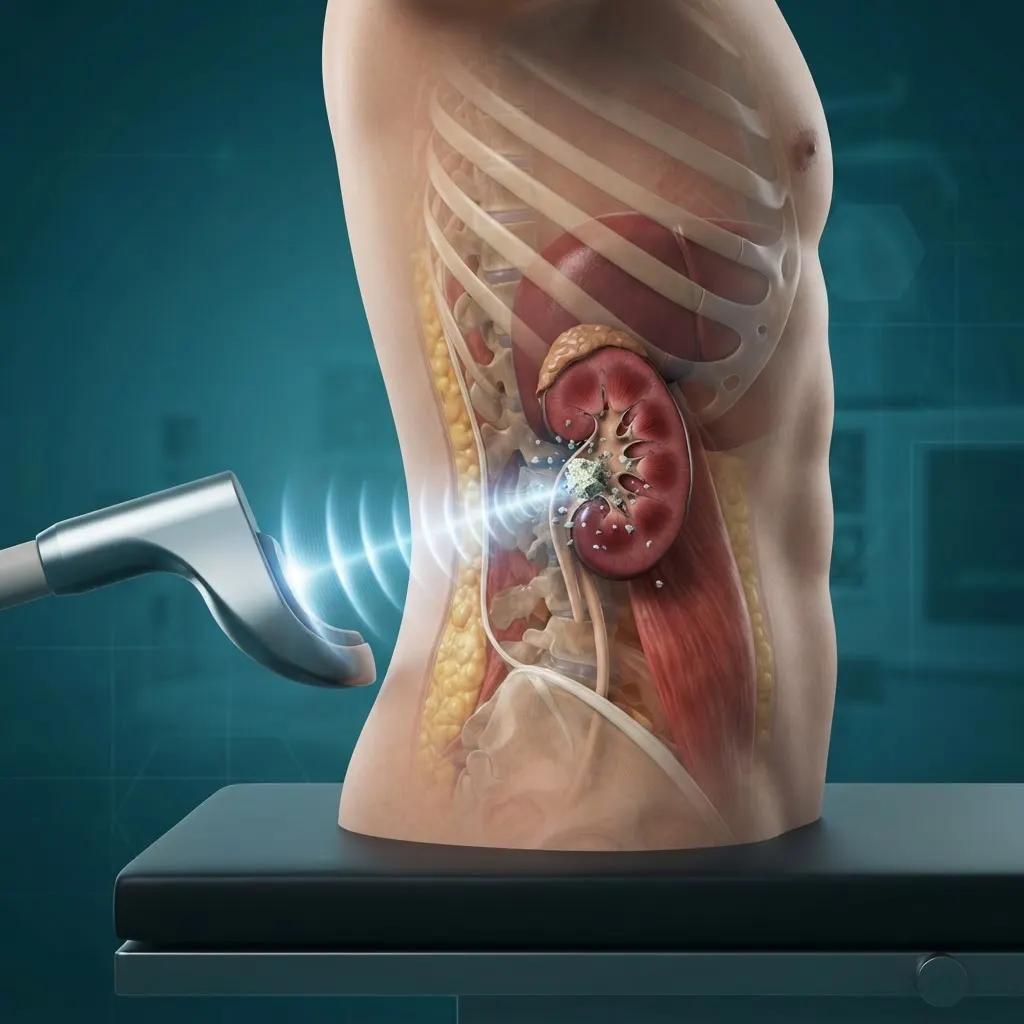
Extracorporeal Shock Wave Lithotripsy
ESWL in India for selected kidney or upper-ureteric stones, with CT-based assessment, shock-wave treatment and access to endourology when needed.
Related Conditions
Our services are FREE and by using our services your hospital bill does not increase!
About Extracorporeal Shock Wave Lithotripsy
Extracorporeal shock wave lithotripsy (ESWL) in India is a non-invasive treatment that uses externally generated shock waves to fragment selected kidney or upper-ureteric stones so smaller pieces can pass through the urinary tract. It is most useful when stone size, location and composition are favourable and there is no untreated infection or major obstruction.
A urologist reviews CT or other imaging, stone burden, urinary anatomy, kidney function, urine testing and factors affecting fragmentation. ESWL may be less effective for larger stones, very hard stone types, unfavourable lower-pole anatomy or significant obstruction. Some patients need more than one session, temporary ureteral stenting or additional ureteroscopy if fragments do not clear.
Potential risks include renal colic, bruising, blood in the urine, infection, steinstrasse from retained fragments and incomplete stone clearance. Pregnancy, untreated urinary infection and important bleeding risks can make ESWL unsuitable. Fever with an obstructed urinary system, severe uncontrolled pain or signs of sepsis require urgent local urological assessment rather than planned travel.
The cost of ESWL in India depends on imaging, number of sessions, anaesthesia or sedation if used, stent placement, hospital or day-care charges and any additional endourological procedure. India has urology centres with modern lithotripsy systems, endourologists, CT-based planning and access to ureteroscopy or PCNL when needed.
Medical Help India can connect you with a suitable healthcare partner whose urology team can review your scans and urine results, compare ESWL with ureteroscopy or PCNL and provide an individual treatment estimate.
What's Included
Why consider treatment in India?
Access to experienced specialists
Advanced treatment and diagnostic options
More affordable hospital care
Shorter waiting times for treatment
Help comparing hospitals, plans and costs
Support with appointments, travel and follow-up
Cost in India
USDFinal costs depend on the medical assessment, hospital, room category and clinical needs.
How it works
Share your details
Tell us about your health concerns, age and current location.
Receive a call
We call you to discuss your situation, needs and questions.
Receive a treatment plan
Get information about the most suitable treatment plan, hospital and estimated cost.
Choose your plan
Review the options and agree on your care and travel plan.
Get full support
Receive full support throughout every stage of your care journey.
Receive care in India
Receive your planned care with support throughout your stay.
Top Hospitals for Extracorporeal Shock Wave Lithotripsy
View All Hospitals →
Top Doctors for Extracorporeal Shock Wave Lithotripsy
View All Doctors →
Frequently Asked Questions
How much does Extracorporeal Shock Wave Lithotripsy cost in India?
The cost of Extracorporeal Shock Wave Lithotripsy in India depends on the hospital, specialist team, investigations, treatment complexity and any additional care required. A final estimate is usually prepared after a healthcare provider reviews your medical records.
Which medical reports are useful to have ready for Extracorporeal Shock Wave Lithotripsy?
Have ready: the most recent records you have, such as your diagnosis, doctor’s notes, blood tests, imaging, pathology reports, procedure reports and current medication list. The exact documents needed depend on the treatment and your medical history.
Which stones respond best to ESWL?
Success is influenced by stone size, location, composition, anatomy and patient factors; smaller favourably located stones are generally more suitable.
Can more than one ESWL session be needed?
Yes. Some stones require repeat treatment, and ureteroscopy or another procedure may be needed if fragments do not clear.
When is ESWL not appropriate?
Important considerations include pregnancy, untreated urinary infection, certain bleeding risks and stones whose size, composition or anatomy makes fragmentation unlikely to succeed.
Our services are FREE
We connect you with leading hospitals and specialists in India. You pay the hospital directly.