
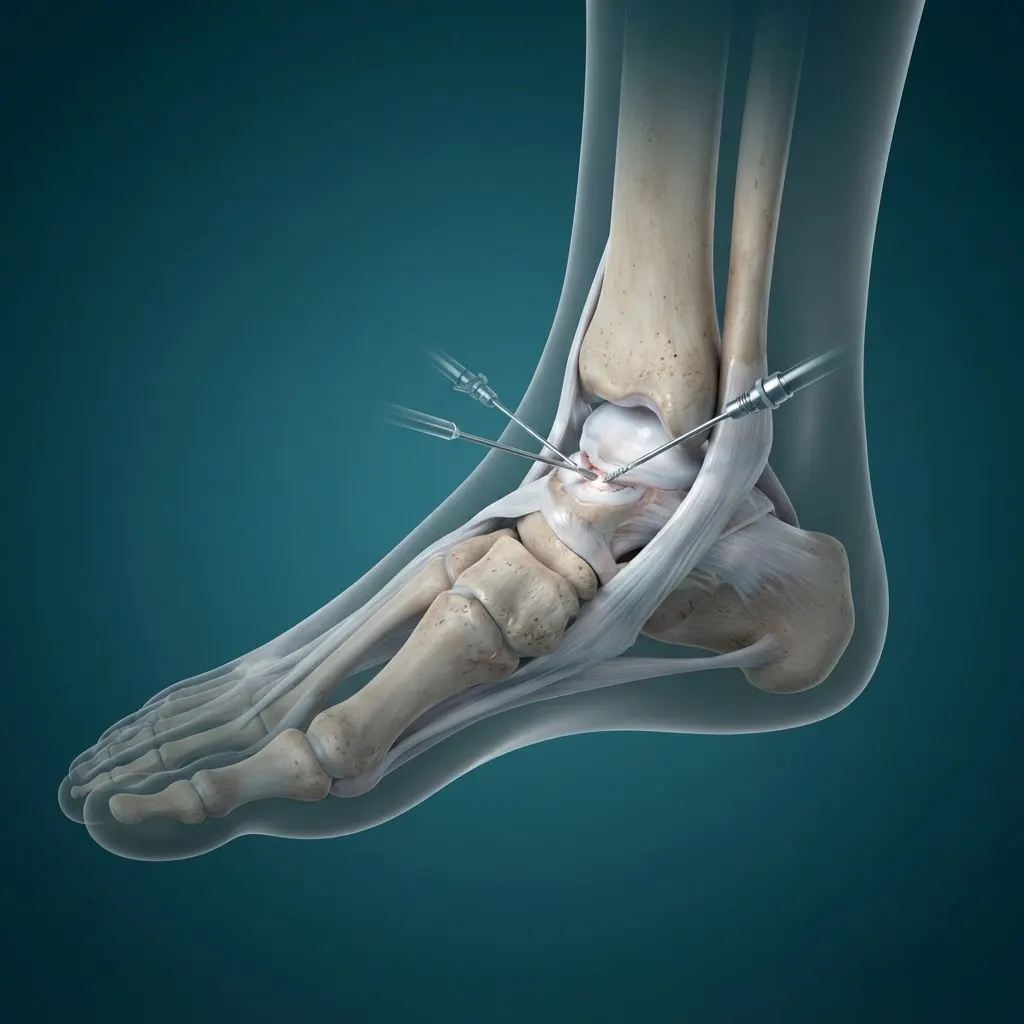
Foot Assessment and Cartilage Surgery
Foot and ankle cartilage surgery in India for selected symptomatic osteochondral lesions, with MRI-based planning, arthroscopy or cartilage restoration and correction of contributing instability or deformity.
Related Conditions
Our services are FREE and by using our services your hospital bill does not increase!
About Foot Assessment and Cartilage Surgery
Foot and ankle cartilage surgery in India is used for selected symptomatic cartilage or osteochondral lesions when persistent pain, swelling, catching or loss of function correlates with imaging and appropriate non-surgical treatment has not been sufficient. Treatment should address the cause of joint overload as well as the cartilage defect itself.
Assessment usually includes foot-and-ankle or sports-orthopaedic examination, weight-bearing X-rays and MRI, with CT added when the bony component or exact lesion geometry needs clarification. The specialist reviews lesion size, depth and location, subchondral bone, joint stability, limb alignment and previous treatment before recommending surgery.
Options may include arthroscopic debridement, microfracture or drilling, osteochondral autograft or allograft transplantation and other cartilage-restoration techniques. If deformity or ligament instability is contributing to overload, osteotomy or ligament reconstruction may need to be performed at the same time. Potential risks include stiffness, persistent pain, incomplete healing, donor-site morbidity with graft procedures, infection and later arthritis. Recovery can require several weeks of protected weight-bearing followed by structured rehabilitation.
Cost in India depends on lesion complexity, arthroscopy or graft technique, implants or biologic materials, CT/MRI, anaesthesia, hospital stay and rehabilitation. Combined alignment or ligament procedures increase both cost and recovery requirements. Leading orthopaedic centres in India provide dedicated foot-and-ankle surgeons, sports-medicine teams, arthroscopy, cartilage-restoration techniques, MRI/CT and specialist physiotherapy.
Medical Help India can connect international patients with an appropriate orthopaedic healthcare partner to review weight-bearing imaging and MRI, compare non-operative and cartilage-preservation options and obtain an individual treatment estimate.
What's Included
Why consider treatment in India?
Access to experienced specialists
Advanced treatment and diagnostic options
More affordable hospital care
Shorter waiting times for treatment
Help comparing hospitals, plans and costs
Support with appointments, travel and follow-up
Cost in India
USDFinal costs depend on the medical assessment, hospital, room category and clinical needs.
How it works
Share your details
Tell us about your health concerns, age and current location.
Receive a call
We call you to discuss your situation, needs and questions.
Receive a treatment plan
Get information about the most suitable treatment plan, hospital and estimated cost.
Choose your plan
Review the options and agree on your care and travel plan.
Get full support
Receive full support throughout every stage of your care journey.
Receive care in India
Receive your planned care with support throughout your stay.
Top Hospitals for Foot Assessment and Cartilage Surgery
View All Hospitals →
Top Doctors for Foot Assessment and Cartilage Surgery
View All Doctors →
Frequently Asked Questions
How much does Foot Assessment And Cartilage Surgery cost in India?
Cost depends on lesion size and complexity, arthroscopic versus graft-based cartilage restoration, implants or graft materials, imaging, anaesthesia and rehabilitation. If osteotomy or ligament reconstruction is required to correct contributing mechanics, it should be included separately in the estimate.
Which medical reports are useful to have ready for Foot Assessment And Cartilage Surgery?
Have ready: weight-bearing foot or ankle X-rays and MRI images with reports, CT if already performed, the orthopaedic assessment and previous surgery records. Include symptoms, prior rehabilitation or injections and any known instability or alignment problem.
Do all foot or ankle cartilage defects need surgery?
No. Some cartilage defects are incidental or can be treated conservatively; surgery is considered when symptoms, imaging and failed non-operative care support it.
What procedures are used for cartilage lesions?
Depending on lesion characteristics, options can include debridement, microfracture or drilling, osteochondral grafting and other cartilage-restoration techniques.
Why are alignment and stability assessed before cartilage surgery?
Abnormal joint mechanics can overload the treated area, so deformity or instability may also need correction for cartilage treatment to succeed.

Our services are FREE
We connect you with leading hospitals and specialists in India. You pay the hospital directly.