
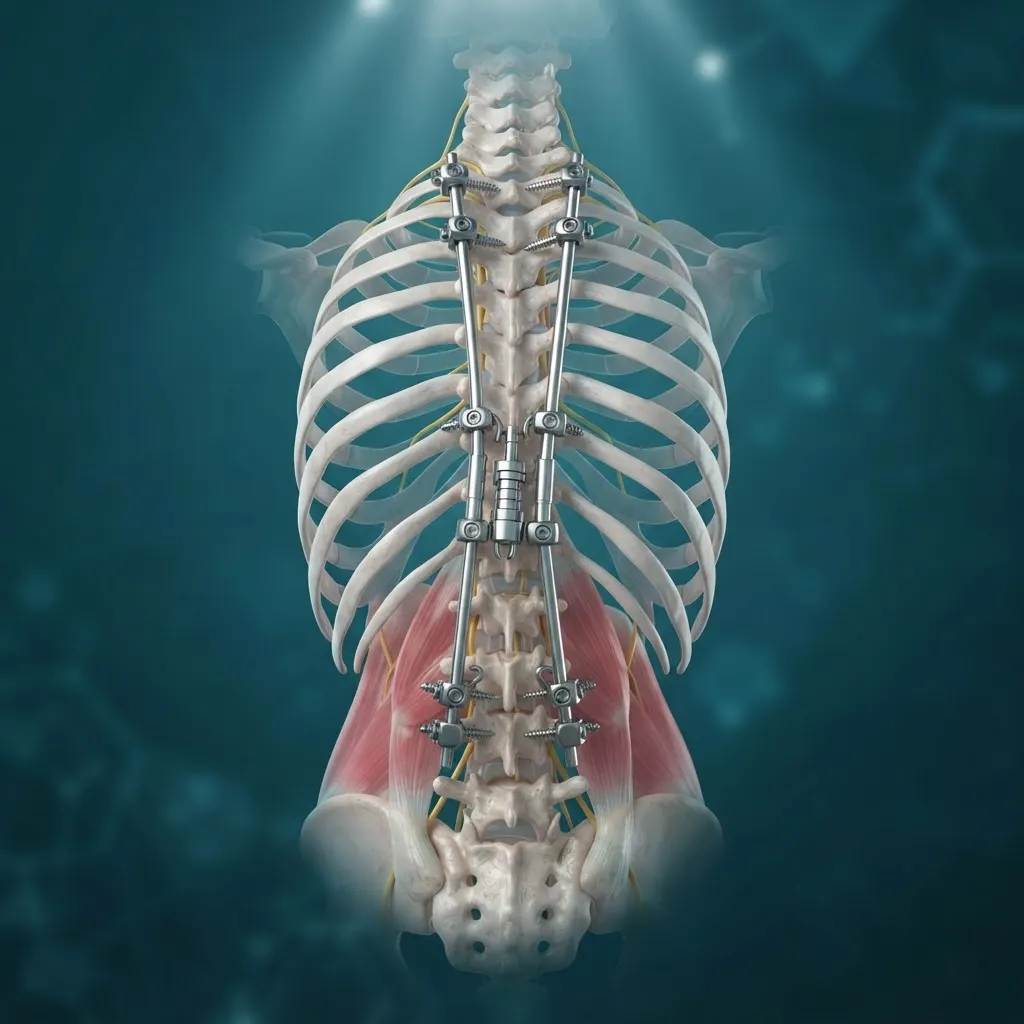
Growing Rod for Scoliosis
Growing-rod scoliosis treatment in India for selected early-onset progressive curves, with paediatric spine assessment, growth-preserving implants and long-term follow-up.
Related Conditions
Our services are FREE and by using our services your hospital bill does not increase!
About Growing Rod for Scoliosis
Growing-rod treatment for scoliosis in India is a growth-preserving surgical strategy for selected children with early-onset progressive scoliosis who still have substantial spinal and chest growth remaining. The aim is to control curve progression while allowing continued growth rather than performing an early definitive fusion.
Assessment by a paediatric spine-deformity team usually includes standing whole-spine X-rays, curve measurements, growth and skeletal-maturity assessment and MRI when congenital abnormalities, neurological findings or another underlying cause needs evaluation. The team also reviews pulmonary status in children with severe thoracic deformity and considers whether casting, bracing, vertebral growth modulation or another growth-friendly technique may be more appropriate.
Traditional growing rods usually require repeated operative lengthening, while magnetically controlled rods can allow selected lengthenings in clinic without a new open operation each time. Neither approach eliminates the need for long-term surveillance. Complications can include infection, rod or anchor failure, loss of correction, stiffness, unplanned revision surgery and difficulty maintaining growth over many years. Some children later undergo definitive fusion, while the final pathway depends on diagnosis, growth and response to treatment.
The cost of growing-rod scoliosis treatment in India depends on the implant system, number of rods and anchors, imaging, surgical complexity, anaesthesia, hospital stay, repeated lengthening or programming visits, revision procedures and rehabilitation. Leading tertiary paediatric spine centres in India provide deformity surgeons, paediatric anaesthesia, advanced imaging, neuromonitoring and rehabilitation support.
Medical Help India is a connection platform and does not provide treatment directly. We can connect international families with an appropriate healthcare partner in India to review current X-rays and MRI, assess whether a growth-preserving strategy is suitable and provide an individual treatment and cost estimate.
What's Included
Why consider treatment in India?
Access to experienced specialists
Advanced treatment and diagnostic options
More affordable hospital care
Shorter waiting times for treatment
Help comparing hospitals, plans and costs
Support with appointments, travel and follow-up
Cost in India
USDFinal costs depend on the medical assessment, hospital, room category and clinical needs.
How it works
Share your details
Tell us about your health concerns, age and current location.
Receive a call
We call you to discuss your situation, needs and questions.
Receive a treatment plan
Get information about the most suitable treatment plan, hospital and estimated cost.
Choose your plan
Review the options and agree on your care and travel plan.
Get full support
Receive full support throughout every stage of your care journey.
Receive care in India
Receive your planned care with support throughout your stay.
Top Hospitals for Growing Rod for Scoliosis
View All Hospitals →
Frequently Asked Questions
How much does Growing Rod For Scoliosis cost in India?
Cost depends on the growing-rod system, number of rods and anchors, preoperative imaging, neuromonitoring, paediatric anaesthesia, hospital stay, repeated lengthening or programming visits and any revision surgery. Traditional systems requiring operative lengthening and magnetically controlled rods therefore have different long-term cost pathways.
Which medical reports are useful to have ready for Growing Rod For Scoliosis?
Have ready: recent standing whole-spine X-rays, paediatric spine or deformity-clinic notes and MRI when available. Include the child’s age, diagnosis, curve measurements and progression, previous casting or bracing, pulmonary assessments when performed, prior spine surgery and any existing implant details.
Who may be considered for growing rods?
They are mainly considered for selected children with progressive early-onset scoliosis who still have substantial spinal and chest growth remaining.
Do growing rods need repeated lengthening?
Traditional systems usually require surgical lengthening, while some magnetically controlled rods can be lengthened externally; availability and suitability vary.
Are growing rods the only option for early scoliosis?
No. Depending on age and diagnosis, casting, bracing, other growth-friendly techniques or definitive fusion may be considered.
Our services are FREE
We connect you with leading hospitals and specialists in India. You pay the hospital directly.