
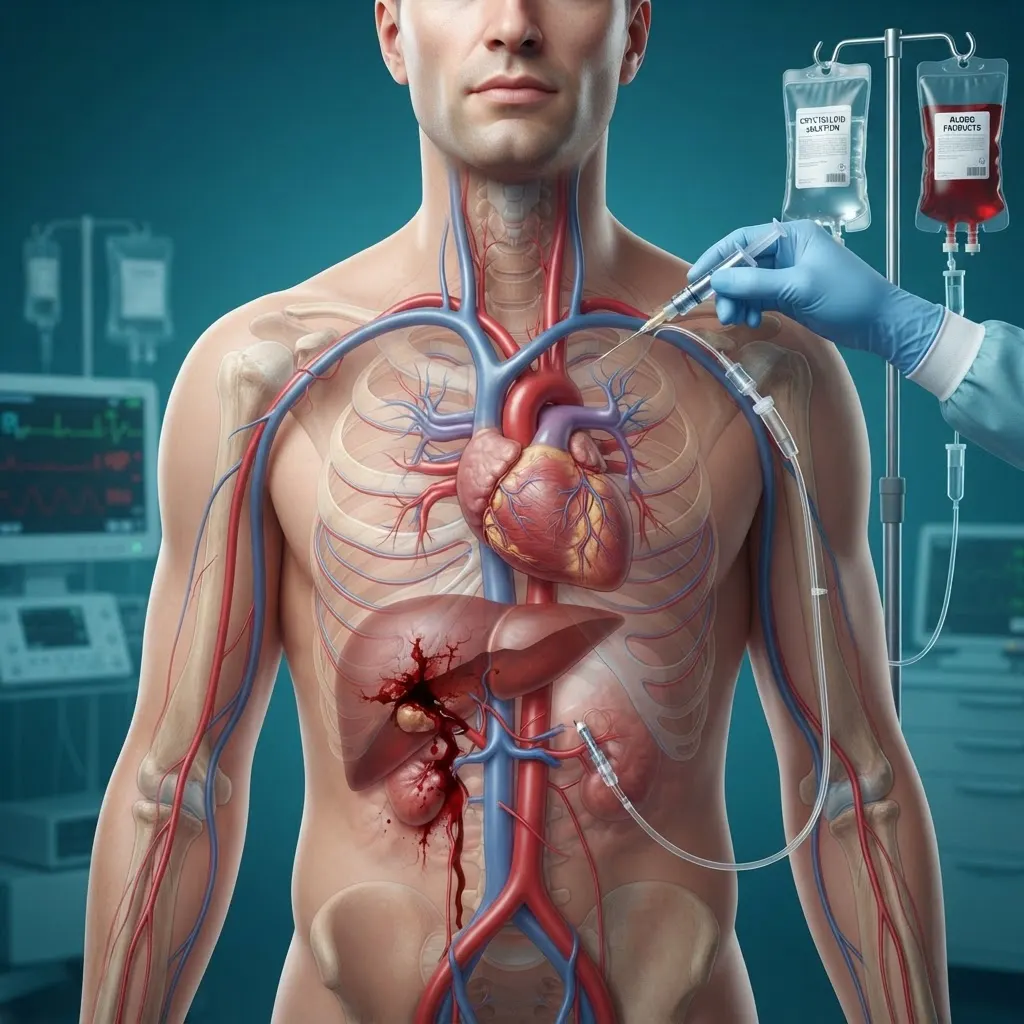
Hypovolemic Shock Emergency Treatment
Hypovolemic shock requires immediate local resuscitation and control of major blood or fluid loss; transfer to India should be considered only after medical stabilisation.
Related Conditions
Our services are FREE and by using our services your hospital bill does not increase!
About Hypovolemic Shock Emergency Treatment
Hypovolemic shock is a life-threatening emergency caused by a critical loss of circulating blood or fluid volume, most often from major haemorrhage but also from severe gastrointestinal losses, burns or other profound fluid loss. An unstable patient needs immediate emergency treatment where they are located; planned international medical travel must not delay resuscitation or control of the underlying cause.
Emergency care follows an airway, breathing and circulation approach with rapid assessment of blood pressure, mental status, peripheral perfusion and the likely source of volume loss. Clinicians obtain urgent vascular or intraosseous access and relevant laboratory testing while resuscitation is underway. In haemorrhagic shock, early blood-component therapy and rapid haemorrhage control are central; large-volume crystalloid alone is not a substitute for blood when major bleeding is the cause. Severe non-haemorrhagic fluid loss requires cause-specific fluid and electrolyte replacement.
Definitive treatment depends on the source. Trauma, gastrointestinal bleeding, ruptured vascular disease, obstetric haemorrhage or postoperative bleeding may require emergency surgery, endoscopy or interventional radiology. Patients may also need massive-transfusion protocols, correction of coagulopathy, active warming, mechanical ventilation and intensive-care support. Persistent hypotension despite appropriate volume replacement requires immediate reassessment for ongoing bleeding or another form of shock rather than routine transfer planning.
The cost of hypovolemic-shock treatment in India cannot be meaningfully quoted as a fixed package before stabilisation. It depends on emergency imaging and laboratory testing, blood products, surgery, endoscopy or embolisation, anaesthesia, ICU duration, ventilation and treatment of organ failure or other complications. Major tertiary hospitals in India can provide 24-hour emergency medicine, trauma and acute surgery, blood-bank support, interventional radiology and critical care.
Medical Help India is a connection platform, not an emergency service. For a patient who has already been stabilised, we can connect the treating team or family with an appropriate healthcare partner in India to review the emergency records, determine whether transfer is medically appropriate and provide an individual estimate for ongoing specialist care.
What's Included
Why consider treatment in India?
Access to experienced specialists
Advanced treatment and diagnostic options
More affordable hospital care
Shorter waiting times for treatment
Help comparing hospitals, plans and costs
Support with appointments, travel and follow-up
Cost in India
USDFinal costs depend on the medical assessment, hospital, room category and clinical needs.
How it works
Share your details
Tell us about your health concerns, age and current location.
Receive a call
We call you to discuss your situation, needs and questions.
Receive a treatment plan
Get information about the most suitable treatment plan, hospital and estimated cost.
Choose your plan
Review the options and agree on your care and travel plan.
Get full support
Receive full support throughout every stage of your care journey.
Receive care in India
Receive your planned care with support throughout your stay.
Top Hospitals for Hypovolemic Shock Emergency Treatment
View All Hospitals →

Frequently Asked Questions
How much does Hypovolemic Shock Emergency Treatment cost in India?
There is no reliable fixed package price for hypovolemic shock because treatment is driven by the cause and severity. Cost can include emergency laboratory and imaging tests, blood products, surgery, endoscopy or embolisation, anaesthesia, ICU care, ventilation and treatment of organ failure or other complications. Stabilisation takes priority over obtaining an overseas estimate.
Which medical reports are useful to have ready for Hypovolemic Shock Emergency Treatment?
If the patient is already stabilised and transfer or a second opinion is being considered, send the emergency and ICU summary, cause of the shock, latest vital signs and haemoglobin and other relevant blood results, transfusion record, imaging and all operative, endoscopy or interventional-radiology reports. Include current respiratory or circulatory support, medicines and a written assessment from the treating team confirming whether transfer is medically safe.
Can hypovolemic shock be treated through planned medical travel?
No. An unstable patient needs immediate emergency treatment where they are located and should not delay care for travel.
What are the priorities in treatment?
Rapid resuscitation, identifying the source of blood or fluid loss and controlling ongoing haemorrhage or fluid loss are the immediate priorities.
When can transfer be considered?
Only after the treating team has stabilised the patient and confirms that transfer is medically safe.

Our services are FREE
We connect you with leading hospitals and specialists in India. You pay the hospital directly.