
IVC Filter Placement
IVC filter placement in India for selected patients with venous thromboembolism who cannot safely receive anticoagulation, with image-guided insertion, retrieval planning and specialist follow-up.
Our services are FREE and by using our services your hospital bill does not increase!
About IVC Filter Placement
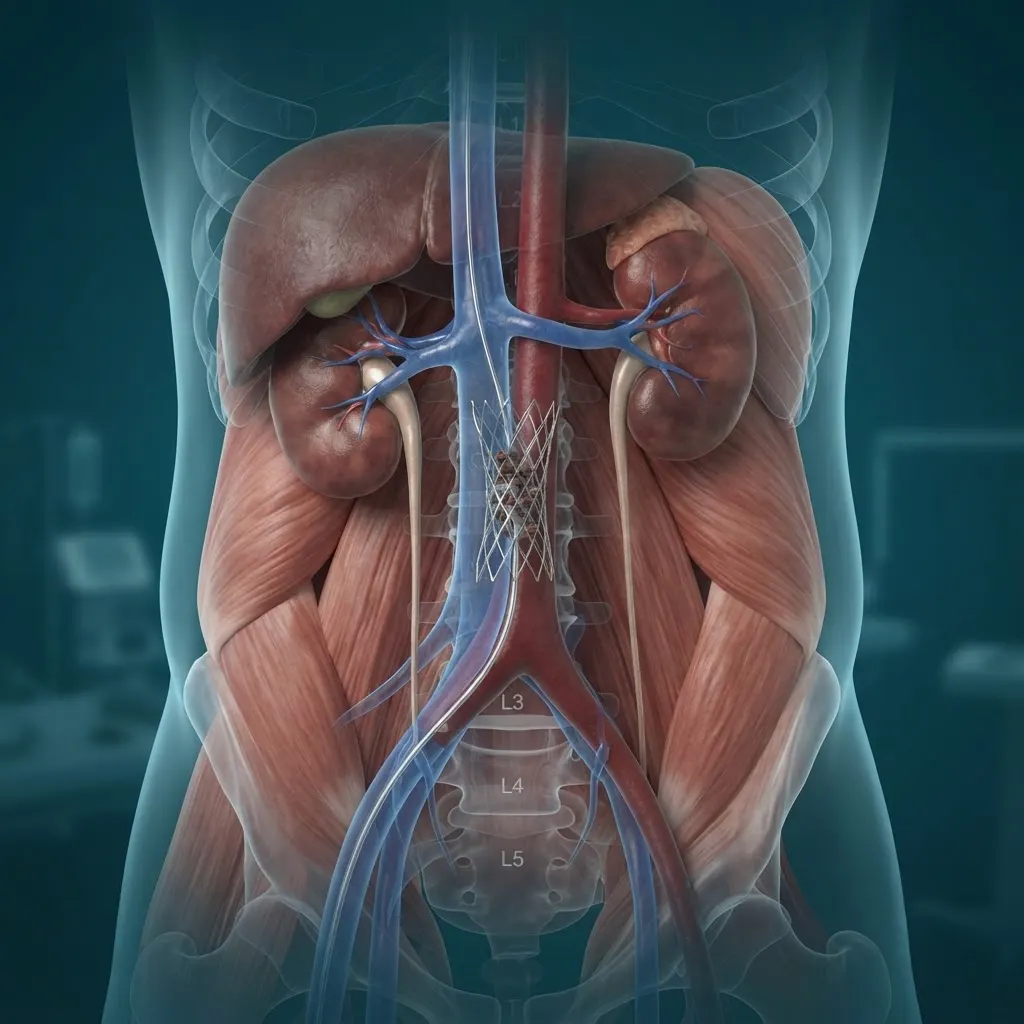
IVC filter placement in India is an image-guided venous procedure in which a filter is positioned in the inferior vena cava to reduce the risk of a large clot travelling from the legs or pelvis to the lungs. It is used selectively, most commonly when a patient with acute venous thromboembolism has a temporary or major contraindication to effective anticoagulation. An IVC filter is not a routine replacement for anticoagulant treatment and does not dissolve an existing DVT or pulmonary embolus.
Before placement, an interventional radiologist or vascular specialist reviews the indication, clot history, anticoagulation status, bleeding risk and venous anatomy. Ultrasound, CT venography or existing vascular imaging may be reviewed, and venography is commonly used during the procedure. The filter is usually introduced through a neck or groin vein under fluoroscopic guidance. When the clinical need is expected to be temporary, a retrievable filter should be paired with a clear follow-up and removal plan.
Potential complications include new or recurrent DVT, IVC thrombosis, filter migration, fracture, penetration of the caval wall and difficulty retrieving a filter that remains in place for a long time. Once anticoagulation can safely be resumed and protection is no longer required, the treating team should reassess whether a retrievable filter can be removed. New severe breathlessness, chest pain, coughing blood or collapse may indicate pulmonary embolism and requires immediate local emergency assessment rather than planned travel.
Cost in India depends on the filter model, pre-procedure imaging, venography, interventional-radiology or vascular-team fees, fluoroscopy-suite charges, sedation or anaesthesia, hospital or day-care stay, follow-up imaging and later retrieval when required. Tertiary hospitals in India can provide interventional radiology, vascular medicine or surgery, venous imaging, anticoagulation management and filter-retrieval services.
Medical Help India can connect international patients with an appropriate vascular or interventional-radiology healthcare partner in India to review the indication, assess whether filter placement is appropriate, plan retrieval when relevant and obtain an individual procedure estimate. Medical Help India is a connection platform and does not replace emergency assessment for suspected acute pulmonary embolism.
What's Included
Why consider treatment in India?
Access to experienced specialists
Advanced treatment and diagnostic options
More affordable hospital care
Shorter waiting times for treatment
Help comparing hospitals, plans and costs
Support with appointments, travel and follow-up
Cost in India
USDFinal costs depend on the medical assessment, hospital, room category and clinical needs.
How it works
Share your details
Tell us about your health concerns, age and current location.
Receive a call
We call you to discuss your situation, needs and questions.
Receive a treatment plan
Get information about the most suitable treatment plan, hospital and estimated cost.
Choose your plan
Review the options and agree on your care and travel plan.
Get full support
Receive full support throughout every stage of your care journey.
Receive care in India
Receive your planned care with support throughout your stay.
Top Hospitals for IVC Filter Placement
View All Hospitals →
Frequently Asked Questions
How much does IVC Filter Placement cost in India?
Cost depends on the IVC filter model, pre-procedure imaging, venography, interventional-radiology or vascular-team fees, fluoroscopy-suite charges, sedation or anaesthesia, hospital or day-care stay, follow-up imaging and later retrieval when required. Retrieval is usually a separate procedure and should be included in planning when a temporary filter is intended.
Which medical reports are useful to have ready for IVC Filter Placement?
Have ready: vascular or haematology notes, ultrasound or CT venography if available, records confirming DVT or pulmonary embolism, recent blood count and kidney-function results and details of current or recently stopped anticoagulation. Include the reason anticoagulation cannot be used, any previous IVC filter or venous procedure and whether a retrievable filter and removal plan have already been discussed.
When is an IVC filter used?
It is mainly considered when a patient at significant risk of pulmonary embolism cannot safely receive effective anticoagulation or has another specific specialist indication.
Does an IVC filter treat an existing blood clot?
No. The filter is intended to reduce the risk of a large clot reaching the lungs; it does not dissolve or treat the original venous thrombosis.
Should a retrievable IVC filter be removed?
When the temporary indication has resolved and removal is clinically appropriate, retrieval is generally considered to reduce long-term filter-related complications.

Our services are FREE
We connect you with leading hospitals and specialists in India. You pay the hospital directly.