
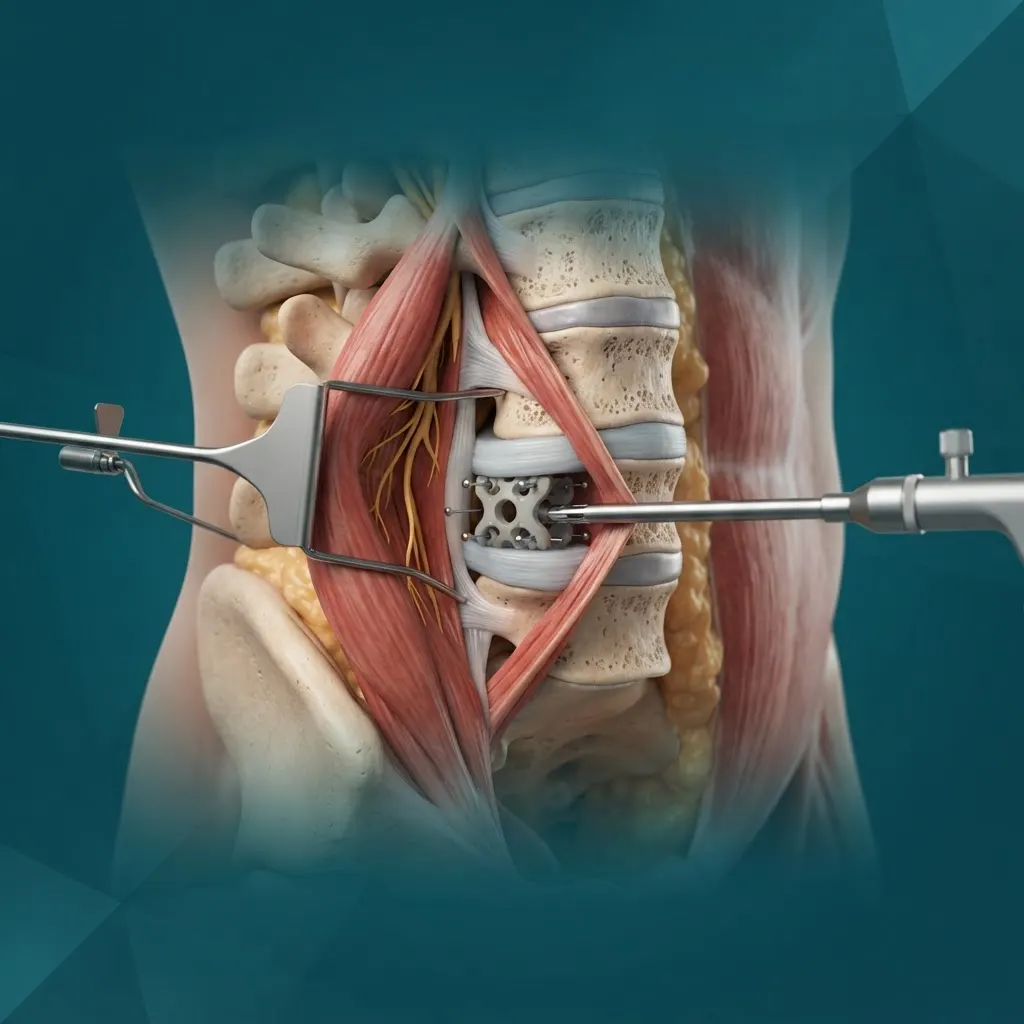
Lateral Lumbar Interbody Fusion (LLIF/XLIF)
LLIF/XLIF in India with MRI and standing X-ray assessment, minimally invasive lateral lumbar fusion, implant planning and specialist rehabilitation for selected degenerative or deformity cases.
Related Conditions
Our services are FREE and by using our services your hospital bill does not increase!
About Lateral Lumbar Interbody Fusion (LLIF/XLIF)
Lateral lumbar interbody fusion (LLIF/XLIF) in India is a minimally invasive lumbar fusion approach that reaches the disc space from the side. It may be used for selected degenerative disc disease, foraminal narrowing, spondylolisthesis, adjacent-segment disease or spinal deformity when restoring disc height, alignment and stability is expected to help. LLIF/XLIF is not suitable for every lumbar problem, and the exact approach depends on the spinal level and anatomy.
Planning requires a spine-specialist examination, standing X-rays and lumbar MRI, with CT added when bone anatomy, previous fusion or implant position needs clarification. The surgeon assesses alignment, nerve compression, bone quality and the relationship of the planned corridor to the iliac crest, major vessels and lumbar plexus. Some patients require posterior screws, direct decompression or a staged procedure in addition to the lateral interbody fusion.
Potential risks include lumbar-plexus or nerve injury, temporary thigh numbness or hip-flexor weakness, vascular or visceral injury, infection, non-union, implant subsidence and persistent symptoms. New bowel or bladder dysfunction, saddle numbness or rapidly progressive leg weakness requires urgent local assessment rather than planned travel because severe nerve compression can be an emergency.
The cost of LLIF/XLIF in India depends on the number of levels fused, interbody cages and fixation implants, whether posterior instrumentation or decompression is added, imaging or navigation, anaesthesia, hospital stay and rehabilitation. Current scans are needed before a hospital can provide a procedure-specific estimate.
India offers access to orthopaedic and neurosurgical spine teams at tertiary hospitals with minimally invasive spine systems, advanced imaging, navigation where indicated and structured rehabilitation. Medical Help India can connect you with a suitable healthcare partner whose spine team can review your MRI, X-rays and previous treatment, compare LLIF/XLIF with other appropriate decompression or fusion options and provide an individual hospital estimate.
What's Included
Why consider treatment in India?
Access to experienced specialists
Advanced treatment and diagnostic options
More affordable hospital care
Shorter waiting times for treatment
Help comparing hospitals, plans and costs
Support with appointments, travel and follow-up
Cost in India
USDFinal costs depend on the medical assessment, hospital, room category and clinical needs.
How it works
Share your details
Tell us about your health concerns, age and current location.
Receive a call
We call you to discuss your situation, needs and questions.
Receive a treatment plan
Get information about the most suitable treatment plan, hospital and estimated cost.
Choose your plan
Review the options and agree on your care and travel plan.
Get full support
Receive full support throughout every stage of your care journey.
Receive care in India
Receive your planned care with support throughout your stay.
Top Hospitals for Lateral Lumbar Interbody Fusion (LLIF/XLIF)
View All Hospitals →
Top Doctors for Lateral Lumbar Interbody Fusion (LLIF/XLIF)
View All Doctors →
Frequently Asked Questions
How much does Lateral Lumbar Interbody Fusion (LLIF/XLIF) cost in India?
Cost depends on the number of levels fused, interbody cages and fixation implants, whether posterior screws or decompression are added, navigation or imaging, anaesthesia, hospital stay and rehabilitation. Revision or deformity surgery can increase complexity and cost.
Which medical reports are useful to have ready for Lateral Lumbar Interbody Fusion (LLIF/XLIF)?
Have ready: lumbar MRI, standing X-rays and CT if available, plus spine-specialist notes and records of previous lumbar surgery. Include pain distribution, numbness or weakness, walking limitations, previous injections or physiotherapy and any bowel or bladder symptoms.
What is the advantage of the lateral LLIF/XLIF approach?
It can access selected lumbar disc spaces with less posterior muscle disruption while restoring disc height and alignment.
Can LLIF/XLIF be used at every lumbar level?
No. Iliac-crest height, vascular anatomy and the lumbar plexus affect which levels can be safely approached laterally.
What neurological symptoms can occur after LLIF?
Temporary thigh numbness, pain or hip-flexor weakness can occur because the approach passes near the lumbar plexus; persistent nerve injury is less common.

Our services are FREE
We connect you with leading hospitals and specialists in India. You pay the hospital directly.