
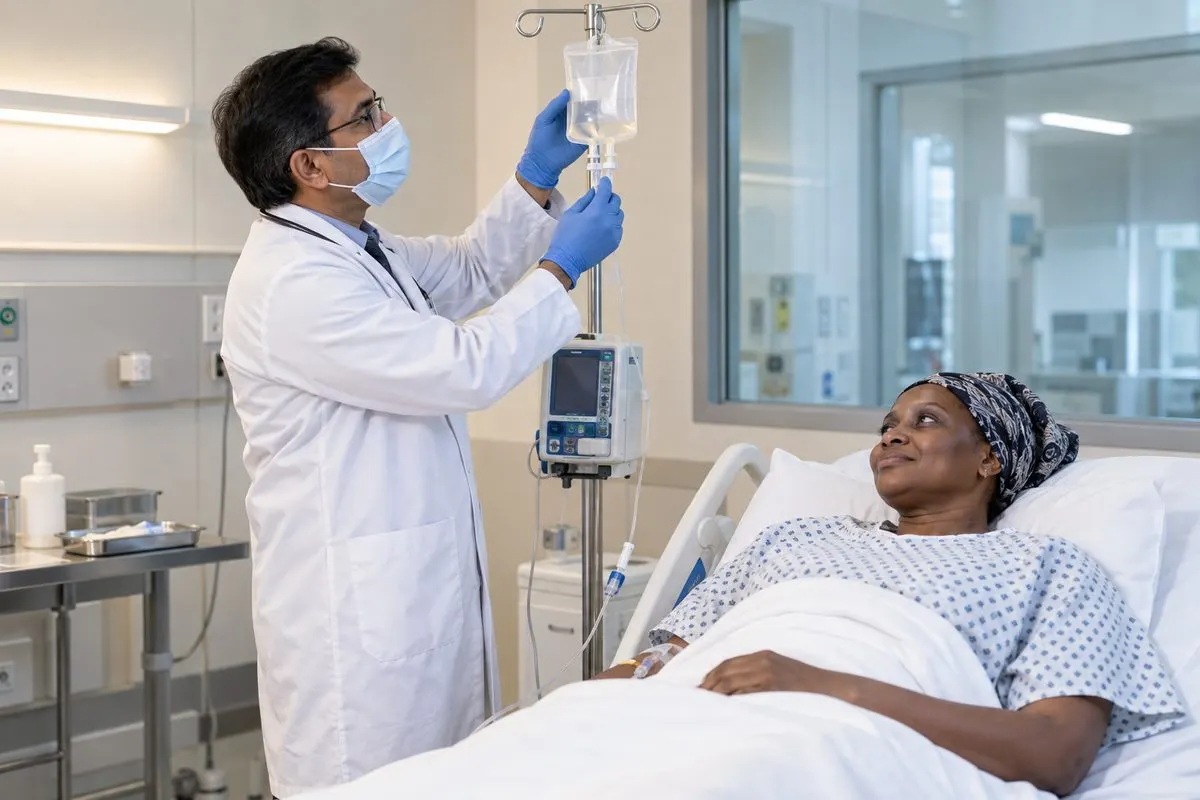
Matched Unrelated Donor Mud Transplant
Matched unrelated donor stem-cell transplant in India using registry-selected HLA-matched donor cells after disease, organ-function and donor-search assessment.
Our services are FREE and by using our services your hospital bill does not increase!
About Matched Unrelated Donor Mud Transplant
Matched unrelated donor (MUD) stem-cell transplant in India is an allogeneic haematopoietic stem-cell transplant using a volunteer donor selected through high-resolution HLA matching when a suitable related donor is unavailable. It may be used for selected leukaemias, lymphomas, myelodysplastic syndromes, marrow-failure disorders and other haematological diseases when transplant is clinically appropriate.
Evaluation includes confirmation of disease status, detailed HLA typing, donor search and verification, infection screening and heart, lung, kidney and liver assessment. The transplant team chooses conditioning intensity, stem-cell source and graft-versus-host disease (GVHD) prevention according to the diagnosis, recipient age, comorbidities and donor characteristics. Donor availability and collection logistics can also affect timing.
MUD transplantation can offer curative treatment in selected diseases, but risks include GVHD, severe infection, graft failure, treatment-related organ toxicity and relapse. Patients require protective isolation during profound immunosuppression, close blood-count and infection monitoring and long-term follow-up as the immune system recovers.
Cost in India depends on donor-search and procurement charges, HLA testing, conditioning, stem-cell transport where applicable, blood products, isolation-room stay, anti-infective medicines and management of complications. Major transplant centres in India can provide allogeneic transplant teams, HLA support, intensive care and long-term haematology follow-up. Medical Help India can connect international patients with an appropriate healthcare partner to review disease records and available HLA results, assess donor-search options and provide an individual transplant estimate.
What's Included
Why consider treatment in India?
Access to experienced specialists
Advanced treatment and diagnostic options
More affordable hospital care
Shorter waiting times for treatment
Help comparing hospitals, plans and costs
Support with appointments, travel and follow-up
Cost in India
USDFinal costs depend on the medical assessment, hospital, room category and clinical needs.
How it works
Share your details
Tell us about your health concerns, age and current location.
Receive a call
We call you to discuss your situation, needs and questions.
Receive a treatment plan
Get information about the most suitable treatment plan, hospital and estimated cost.
Choose your plan
Review the options and agree on your care and travel plan.
Get full support
Receive full support throughout every stage of your care journey.
Receive care in India
Receive your planned care with support throughout your stay.
Top Hospitals for Matched Unrelated Donor Mud Transplant
View All Hospitals →
Top Doctors for Matched Unrelated Donor Mud Transplant
View All Doctors →

Frequently Asked Questions
How much does Matched Unrelated Donor Mud Transplant cost in India?
Cost depends on donor-registry search and procurement, high-resolution HLA testing, conditioning, stem-cell collection and transport where applicable, blood products, protective isolation, anti-infective medicines, hospital stay and treatment of complications such as GVHD or severe infection.
Which medical reports are useful to have ready for Matched Unrelated Donor Mud Transplant?
Have ready: pathology or bone-marrow reports, disease-status testing, previous treatment summaries, recent blood counts and organ-function tests, infection screening and current medicines. Include the patient’s available high-resolution HLA results, any donor-search report and previous transplant-centre recommendations.
How is a matched unrelated donor found?
Transplant teams search donor registries using the patient’s HLA profile and then confirm donor availability and suitability before proceeding.
Is a matched unrelated donor transplant only for children?
No. MUD transplantation is used in both adults and children when clinically appropriate for the underlying haematological disease and no better donor option is available.
How long can an unrelated donor search take?
Timing varies according to the HLA profile, registry availability and confirmatory testing. A transplant centre can estimate the process only after reviewing the patient’s HLA results and urgency.

Our services are FREE
We connect you with leading hospitals and specialists in India. You pay the hospital directly.