
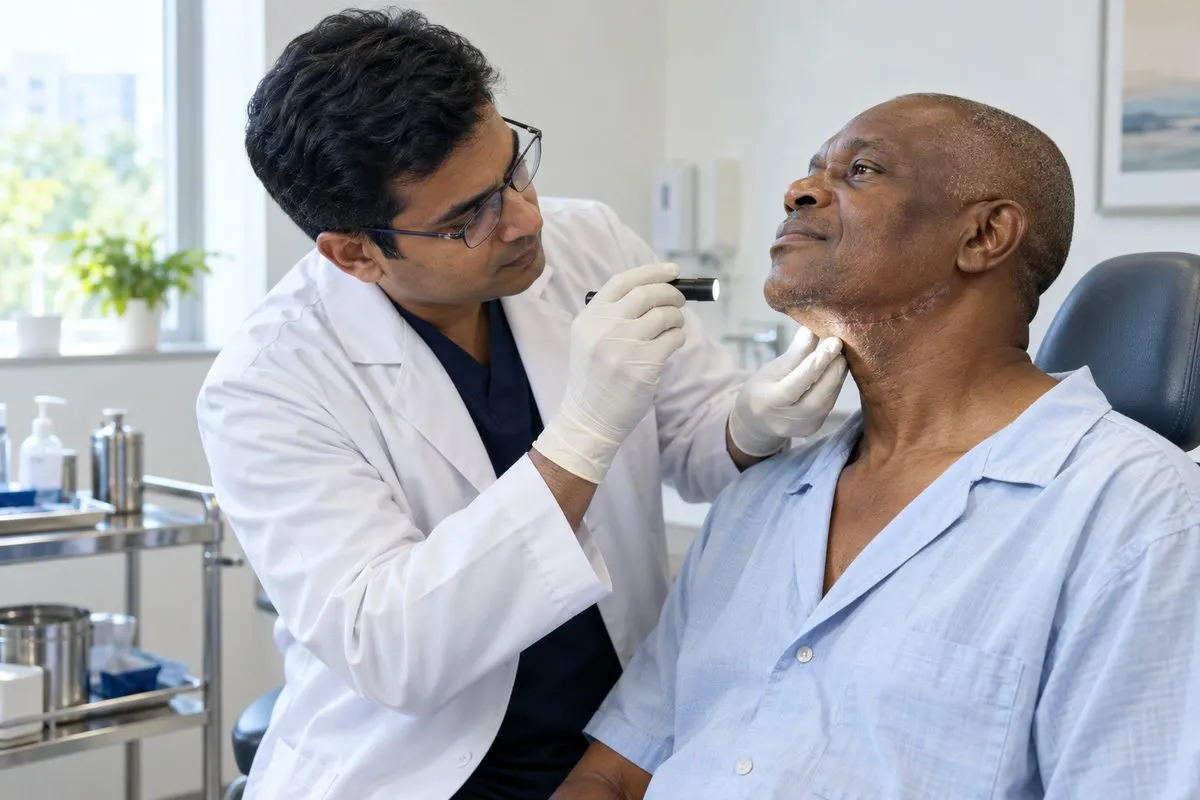
Microvascular Free Flap Reconstruction for Post Cancer Defects
Microvascular free-flap reconstruction in India after cancer surgery, using vascularised soft tissue or bone to restore complex defects with coordinated oncology and rehabilitation planning.
Our services are FREE and by using our services your hospital bill does not increase!
About Microvascular Free Flap Reconstruction for Post Cancer Defects
Microvascular free-flap reconstruction after cancer surgery in India rebuilds complex defects by transferring living skin, fat, muscle and/or bone from another part of the body together with its artery and vein. The vessels are reconnected under a microscope at the reconstruction site. It is commonly used after selected head-and-neck, jaw, breast, limb and other cancer resections when local tissue cannot adequately restore form or function.
Planning should begin before or alongside tumour resection whenever possible. The reconstructive team reviews pathology, staging, the expected defect, previous surgery and radiotherapy, nutritional and medical fitness, recipient vessels and donor-site anatomy. CT or MRI and, in selected patients, vascular imaging or virtual surgical planning can help define the reconstruction. Flap choice depends on what must be replaced: soft tissue may be reconstructed with an anterolateral-thigh or forearm flap, while mandibular or other bony defects may require vascularised bone such as a fibula flap.
The aim is not cosmetic coverage alone. Reconstruction may need to restore jaw continuity, oral competence, speech, swallowing, airway protection, limb function or durable wound closure while allowing appropriate cancer surveillance and adjuvant treatment. Free-flap surgery requires close postoperative monitoring because arterial or venous thrombosis can threaten the flap; urgent re-exploration may sometimes salvage compromised tissue. Other risks include bleeding, infection, partial or complete flap loss, wound breakdown, donor-site morbidity and delayed healing, especially after radiotherapy or in medically complex patients. New flap pallor, congestion, coldness or sudden swelling after surgery requires immediate review by the treating microsurgical team.
Cost in India depends on the cancer site and defect, flap and donor site, whether bone reconstruction or patient-specific fixation is required, simultaneous tumour surgery, microsurgical operating time, ICU or high-dependency monitoring, hospital stay, pathology and rehabilitation. Previous radiotherapy, infection, revision surgery or staged dental/prosthetic rehabilitation can materially change the estimate.
India has tertiary cancer and reconstructive centres with head-and-neck, surgical-oncology and plastic-reconstructive teams, microvascular surgery, critical care, speech/swallowing rehabilitation and dental or prosthodontic support where needed. Medical Help India is a connection platform that can connect medically stable international patients with an appropriate healthcare partner to review pathology, imaging and the planned or previous cancer resection, compare reconstructive options and provide an individual treatment and cost estimate.
What's Included
Why consider treatment in India?
Access to experienced specialists
Advanced treatment and diagnostic options
More affordable hospital care
Shorter waiting times for treatment
Help comparing hospitals, plans and costs
Support with appointments, travel and follow-up
Cost in India
USDFinal costs depend on the medical assessment, hospital, room category and clinical needs.
How it works
Share your details
Tell us about your health concerns, age and current location.
Receive a call
We call you to discuss your situation, needs and questions.
Receive a treatment plan
Get information about the most suitable treatment plan, hospital and estimated cost.
Choose your plan
Review the options and agree on your care and travel plan.
Get full support
Receive full support throughout every stage of your care journey.
Receive care in India
Receive your planned care with support throughout your stay.
Top Hospitals for Microvascular Free Flap Reconstruction for Post Cancer Defects
View All Hospitals →
Top Doctors for Microvascular Free Flap Reconstruction for Post Cancer Defects
View All Doctors →
Frequently Asked Questions
How much does Microvascular Free Flap Reconstruction For Post Cancer Defects cost in India?
Cost depends on the cancer site and defect, flap and donor site, whether soft tissue alone or vascularised bone is required, simultaneous tumour surgery, fixation or reconstructive materials, microsurgical operating time, ICU or high-dependency monitoring, hospital stay and rehabilitation. Previous radiotherapy, infection, revision surgery or staged dental/prosthetic rehabilitation can materially change the estimate.
Which medical reports are useful to have ready for Microvascular Free Flap Reconstruction For Post Cancer Defects?
Have ready: the pathology report, latest staging and site-specific CT/MRI images and reports, oncology and reconstructive-surgery notes and the planned or previous cancer-resection operative report. Include previous radiotherapy or chemotherapy, wound or infection history, relevant photographs when requested securely, vascular imaging if performed, current medicines and major medical conditions that may affect anaesthesia, healing or donor-site selection.
What is a microvascular free flap?
It is tissue transferred from another body area together with its artery and vein. The vessels are reconnected microsurgically at the reconstruction site to restore blood flow.
Which donor sites can be used after cancer surgery?
Common options include forearm, thigh, fibula and abdominal tissue. Selection depends on whether skin, muscle, bone or a combination is needed for the defect.
Why is close monitoring important after free-flap surgery?
A newly transferred flap depends on its microsurgical blood-vessel connections. Early recognition of reduced blood flow is important because urgent re-exploration can sometimes salvage the flap.
Our services are FREE
We connect you with leading hospitals and specialists in India. You pay the hospital directly.