
Occipito Cervical and C1 C2 Surgeries
Occipitocervical and C1–C2 surgery in India for selected upper-cervical instability or compression after detailed CT, MRI, vascular assessment and specialist spine review.
Our services are FREE and by using our services your hospital bill does not increase!
About Occipito Cervical and C1 C2 Surgeries
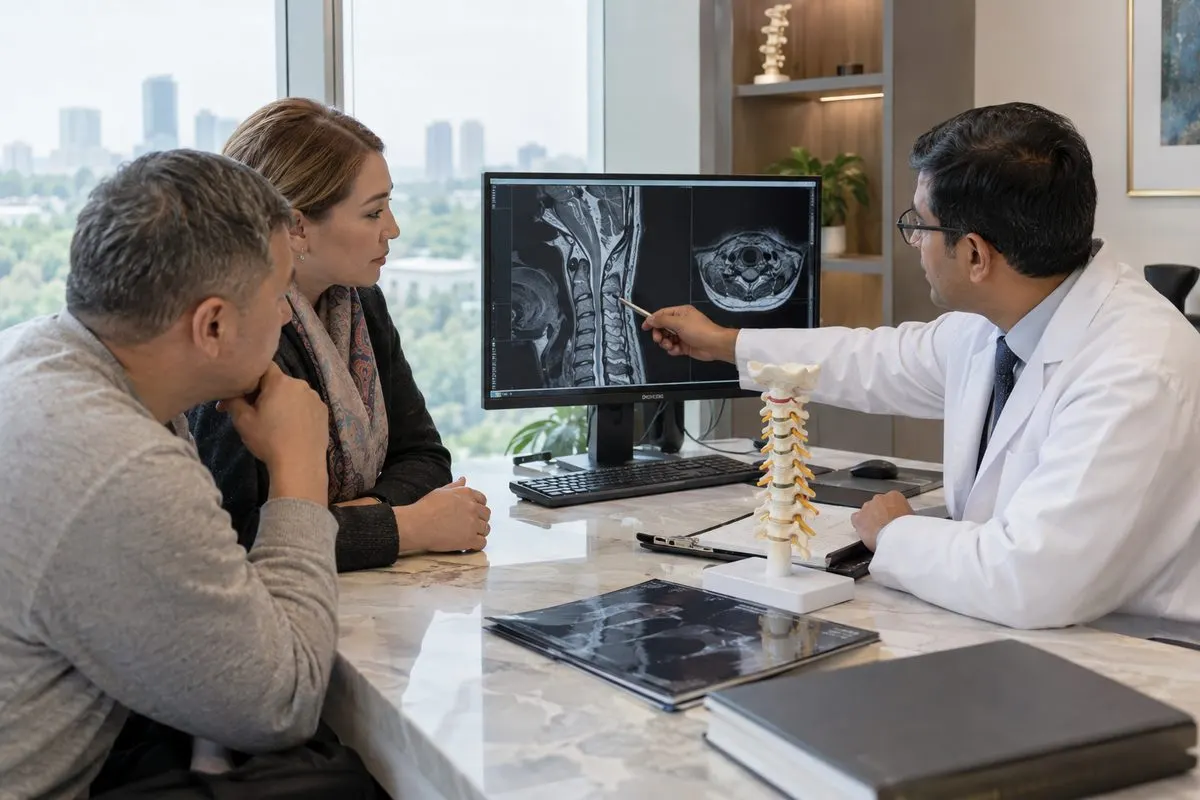
Occipitocervical and C1–C2 surgery in India treats selected instability, deformity or neural compression at the craniovertebral junction and upper cervical spine. Conditions can include atlantoaxial instability, basilar invagination, congenital abnormalities, trauma, rheumatoid disease and selected tumours or infections.
Planning requires high-resolution CT and MRI plus specialist neurological examination, with dynamic X-rays or CT/MR angiography added when instability or vertebral-artery anatomy needs clarification. The team evaluates whether decompression, C1–C2 fixation, occipitocervical fusion or a combined procedure is needed and how much motion can safely be preserved.
Because this region surrounds the upper spinal cord, brainstem and vertebral arteries, surgery is technically demanding. Important risks include neurological injury, vascular injury, non-union, infection, hardware complications and loss of neck movement. Sudden weakness, severe gait deterioration, breathing difficulty or other signs of high-cervical cord compression require urgent local assessment rather than planned travel.
Cost in India depends on the diagnosis, levels fused, implant system, need for decompression, vascular imaging, neuromonitoring, ICU or ward stay and rehabilitation. Leading tertiary neuroscience and spine centres can provide upper-cervical surgeons, neurosurgery, orthopaedic spine expertise, advanced imaging and neurocritical support. Medical Help India can connect medically stable international patients with an appropriate healthcare partner to review CT/MRI and advise on the safest operative strategy and individual estimate.
What's Included
Why consider treatment in India?
Access to experienced specialists
Advanced treatment and diagnostic options
More affordable hospital care
Shorter waiting times for treatment
Help comparing hospitals, plans and costs
Support with appointments, travel and follow-up
Cost in India
USDFinal costs depend on the medical assessment, hospital, room category and clinical needs.
How it works
Share your details
Tell us about your health concerns, age and current location.
Receive a call
We call you to discuss your situation, needs and questions.
Receive a treatment plan
Get information about the most suitable treatment plan, hospital and estimated cost.
Choose your plan
Review the options and agree on your care and travel plan.
Get full support
Receive full support throughout every stage of your care journey.
Receive care in India
Receive your planned care with support throughout your stay.
Frequently Asked Questions
How much does Occipito Cervical And C1 C2 Surgeries cost in India?
Cost depends on the diagnosis, number of levels fused, implant system, need for decompression, vascular imaging, neuromonitoring, ICU or ward stay and rehabilitation. Complex craniovertebral-junction deformity or revision surgery may require a different estimate.
Which medical reports are useful to have ready for Occipito Cervical And C1 C2 Surgeries?
Have ready: high-resolution cervical CT and MRI, dynamic X-rays if performed, vascular imaging when available and neurosurgical or spine notes. Include previous cervical operations, neurological symptoms, gait or balance problems, rheumatoid or congenital disease history and any recent deterioration.
What conditions can require C1–C2 or occipitocervical surgery?
Selected instability, congenital abnormalities, trauma, rheumatoid disease, basilar invagination and some tumours or infections may require surgery.
What imaging is needed before upper-cervical surgery?
CT and MRI are central, with dynamic X-rays or vascular imaging added when instability or vertebral-artery anatomy needs clarification.
Does upper-cervical fusion reduce neck movement?
Yes. Fusion at C1–C2 or the occipitocervical junction can reduce rotation and other neck motion to varying degrees.
Our services are FREE
We connect you with leading hospitals and specialists in India. You pay the hospital directly.