
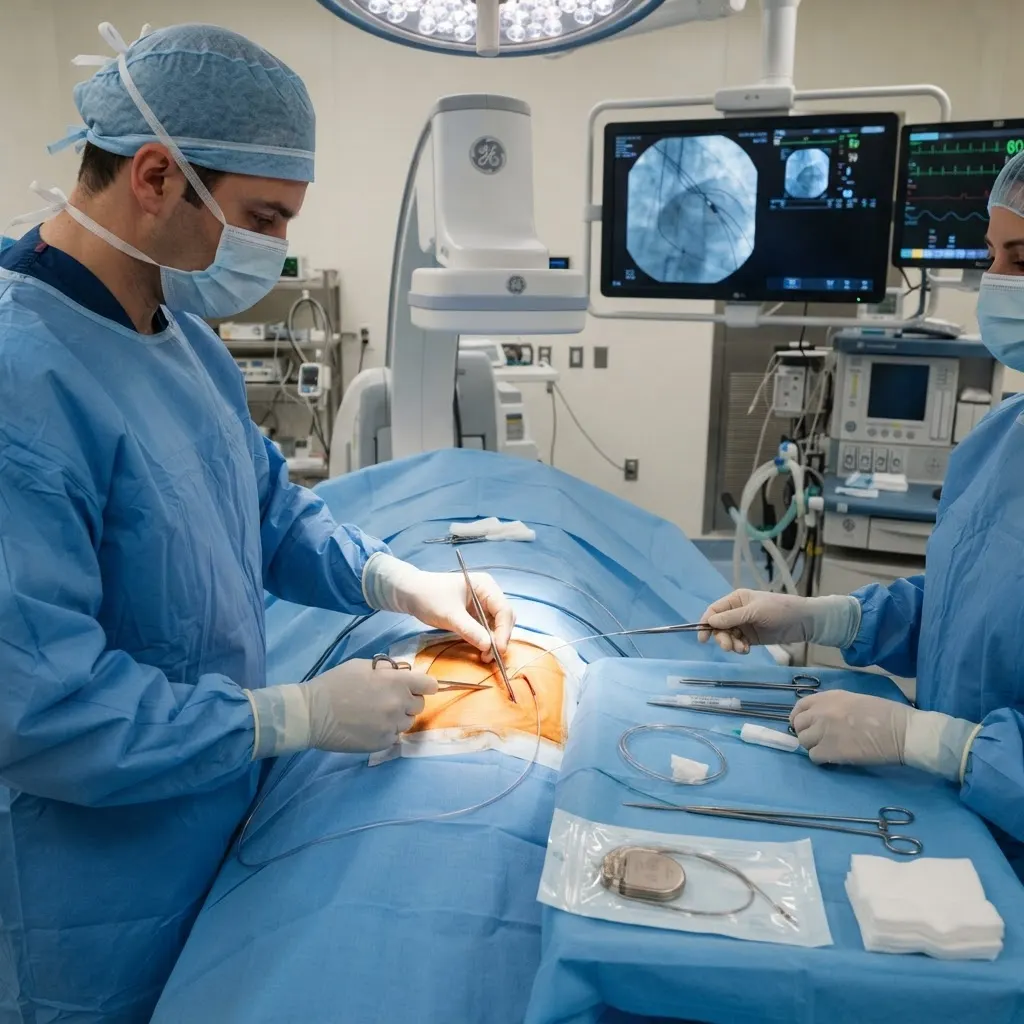
Pacemaker Implantation
Pacemaker implantation in India with electrophysiology assessment, rhythm diagnosis and selection of single-chamber, dual-chamber, leadless or other pacing systems when clinically appropriate.
Related Conditions
Our services are FREE and by using our services your hospital bill does not increase!
About Pacemaker Implantation
Pacemaker implantation in India is used to treat selected slow heart rhythms and conduction disorders when the heart rate is too slow, pauses occur or electrical conduction between the atria and ventricles is unreliable. The device sends electrical impulses when needed, but the correct pacing system depends on the rhythm diagnosis, symptoms, heart function and expected pacing requirements.
Evaluation usually includes a cardiology or electrophysiology assessment, ECG, rhythm monitoring and echocardiography, with blood tests and other cardiac investigations added when appropriate. The team should first consider reversible causes of bradycardia such as medicines, electrolyte abnormalities or acute illness before permanent implantation is planned.
Depending on the clinical problem, patients may need a single-chamber, dual-chamber, leadless or other pacing system. Cardiac resynchronisation therapy is a different device strategy used in selected patients with heart failure and electrical dyssynchrony. Implantation is commonly performed under local anaesthesia with sedation, followed by device testing and short-term monitoring. Risks include bleeding, infection, pneumothorax, lead displacement, venous complications and device malfunction. Fainting, severe dizziness, chest pain or unstable bradycardia requires urgent local medical assessment rather than planned travel.
The cost of pacemaker implantation in India depends mainly on pacemaker type and brand, number of leads, hospital, electrophysiologist or cardiologist fees, anaesthesia or sedation, length of stay and whether lead extraction, revision or another cardiac procedure is required. Leadless systems and more complex pacing devices have different cost profiles from standard single- or dual-chamber pacemakers.
India offers access to cardiac electrophysiology and device teams at tertiary heart hospitals with rhythm monitoring, catheterisation laboratories, cardiac imaging and long-term device follow-up. Medical Help India can connect medically stable international patients with a suitable healthcare partner whose cardiology team can review ECGs, rhythm-monitor results and echocardiography, confirm the pacing indication and provide an individual device and treatment estimate.
What's Included
Why consider treatment in India?
Access to experienced specialists
Advanced treatment and diagnostic options
More affordable hospital care
Shorter waiting times for treatment
Help comparing hospitals, plans and costs
Support with appointments, travel and follow-up
Cost in India
USDFinal costs depend on the medical assessment, hospital, room category and clinical needs.
How it works
Share your details
Tell us about your health concerns, age and current location.
Receive a call
We call you to discuss your situation, needs and questions.
Receive a treatment plan
Get information about the most suitable treatment plan, hospital and estimated cost.
Choose your plan
Review the options and agree on your care and travel plan.
Get full support
Receive full support throughout every stage of your care journey.
Receive care in India
Receive your planned care with support throughout your stay.
Top Hospitals for Pacemaker Implantation
View All Hospitals →




Top Doctors for Pacemaker Implantation
View All Doctors →
Dr. Aritra Konar
Cardiology & Interventional Cardiology · 10+ yrs

Dr. Girish B Navasundi
Cardiology · 21+ yrs

Dr Jayesh Prajapati
Cardiology & Interventional Cardiology · 19+ yrs

Dr. Kavitha Chintala
Paediatric Cardiology · 34+ yrs

Dr. Kuldeep Arora
Cardiology & Interventional Cardiology · 16+ yrs

Dr. Lal Daga
Cardiology, Interventional Cardiology · 20+ yrs
Frequently Asked Questions
How much does Pacemaker Implantation cost in India?
Cost depends mainly on pacemaker type and brand, number of leads, standard versus leadless technology, hospital and cardiology fees, sedation or anaesthesia, length of stay and whether revision, extraction or another cardiac procedure is required. More complex pacing systems have a different cost profile from standard single- or dual-chamber devices.
Which medical reports are useful to have ready for Pacemaker Implantation?
Have ready: ECGs, Holter or event-monitor reports, cardiology or electrophysiology notes and recent echocardiography. Include documented heart rates or pauses, symptoms such as fainting or dizziness, current medicines, previous pacemaker or cardiac-device records and any history of cardiac surgery, infection or venous-access problems.
When is a pacemaker needed?
It is used for selected slow heart rhythms or conduction disorders when symptoms or clinically important bradycardia justify pacing.
What tests are done before pacemaker implantation?
ECG, rhythm monitoring and echocardiography are commonly used together with assessment for reversible causes.
Does a pacemaker need long-term follow-up?
Yes. Device checks monitor battery status, leads, pacing function and any stored rhythm events.

Our services are FREE
We connect you with leading hospitals and specialists in India. You pay the hospital directly.