
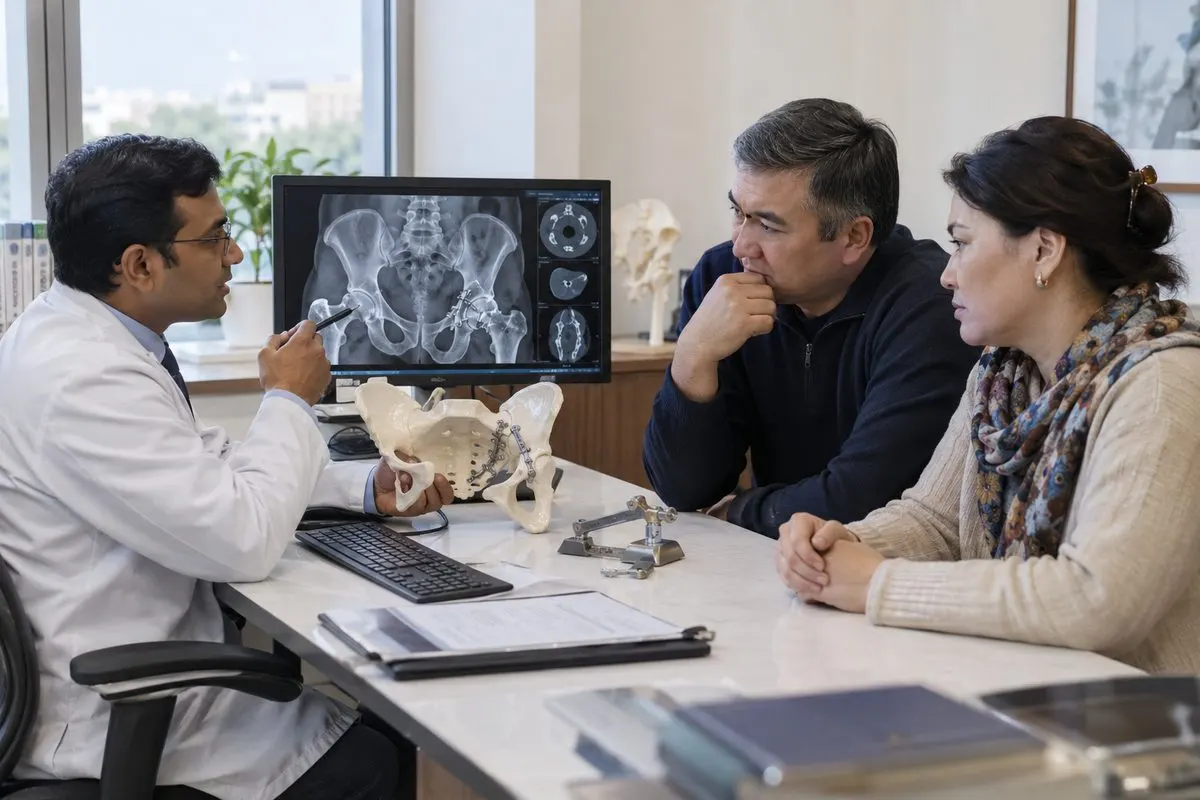
Pelvic and Acetabular Fracture Fixation
Pelvic and acetabular fracture fixation in India for selected unstable pelvic-ring and displaced hip-socket fractures after trauma stabilization and CT-based planning.
Related Conditions
Our services are FREE and by using our services your hospital bill does not increase!
About Pelvic and Acetabular Fracture Fixation
Pelvic and acetabular fracture fixation in India is used for selected unstable pelvic-ring injuries and displaced fractures of the acetabulum, the socket of the hip joint. These injuries often follow high-energy trauma and can occur with major bleeding, abdominal or urological injury, nerve injury and other fractures, so initial trauma resuscitation and control of life-threatening problems take priority over planned fixation.
After stabilization, an orthopaedic trauma surgeon reviews pelvic radiographs and CT imaging with appropriate reconstructions to define the fracture pattern, displacement, hip-joint congruity and surgical corridors. Treatment depends on haemodynamic stability, soft-tissue condition, associated injuries and whether the pelvic ring or acetabular articular surface can remain acceptably aligned without surgery.
Fixation may use plates and screws, percutaneous screw techniques or a combination of approaches. Acetabular surgery aims to restore joint congruity and stability, while pelvic-ring fixation aims to restore mechanical stability. Important risks include bleeding, infection, nerve or vascular injury, venous thromboembolism, heterotopic ossification, fixation failure and post-traumatic hip arthritis. Rehabilitation and weight-bearing restrictions depend on the injury and fixation achieved. A patient with a recent unstable pelvic injury, ongoing bleeding, shock or new neurological or urinary problems needs urgent local trauma care rather than medical travel.
Cost in India depends on the fracture pattern, number and type of implants, operative approach, blood-product requirements, ICU or ward stay, associated-injury treatment and rehabilitation. Major trauma centres in India can provide orthopaedic trauma surgery with anaesthesia, critical care, interventional radiology and urology or general surgery support when required. Medical Help India can connect medically stable international patients with an appropriate healthcare partner to review CT imaging and trauma records, discuss fixation and rehabilitation planning and provide an individual hospital estimate.
What's Included
Why consider treatment in India?
Access to experienced specialists
Advanced treatment and diagnostic options
More affordable hospital care
Shorter waiting times for treatment
Help comparing hospitals, plans and costs
Support with appointments, travel and follow-up
Cost in India
USDFinal costs depend on the medical assessment, hospital, room category and clinical needs.
How it works
Share your details
Tell us about your health concerns, age and current location.
Receive a call
We call you to discuss your situation, needs and questions.
Receive a treatment plan
Get information about the most suitable treatment plan, hospital and estimated cost.
Choose your plan
Review the options and agree on your care and travel plan.
Get full support
Receive full support throughout every stage of your care journey.
Receive care in India
Receive your planned care with support throughout your stay.
Top Hospitals for Pelvic and Acetabular Fracture Fixation
View All Hospitals →



Top Doctors for Pelvic and Acetabular Fracture Fixation
View All Doctors →



Frequently Asked Questions
How much does Pelvic And Acetabular Fracture Fixation cost in India?
Cost depends on the pelvic or acetabular fracture pattern, number and type of fixation implants, operative approach, blood-product requirements, ICU or ward stay, treatment of associated injuries and rehabilitation. High-energy polytrauma or staged fixation can have a substantially different estimate from isolated definitive fixation.
Which medical reports are useful to have ready for Pelvic And Acetabular Fracture Fixation?
After emergency stabilization, send pelvic X-rays and CT images and reports, trauma and orthopaedic notes, operative records and details of any temporary external fixation or embolisation. Include the injury date, associated abdominal, urinary, nerve or vascular injuries, current wound status and weight-bearing restrictions.
Do all pelvic or acetabular fractures require surgery?
No. Surgery is mainly considered for unstable pelvic-ring injuries or displaced acetabular fractures where alignment or stability cannot be maintained non-operatively.
Why is CT important for acetabular fractures?
CT defines the fracture pattern, joint involvement and fragment position for surgical planning.
Can arthritis develop after an acetabular fracture?
Yes. Post-traumatic hip arthritis can develop even after treatment, particularly when cartilage was damaged or joint congruity cannot be fully restored.

Our services are FREE
We connect you with leading hospitals and specialists in India. You pay the hospital directly.