
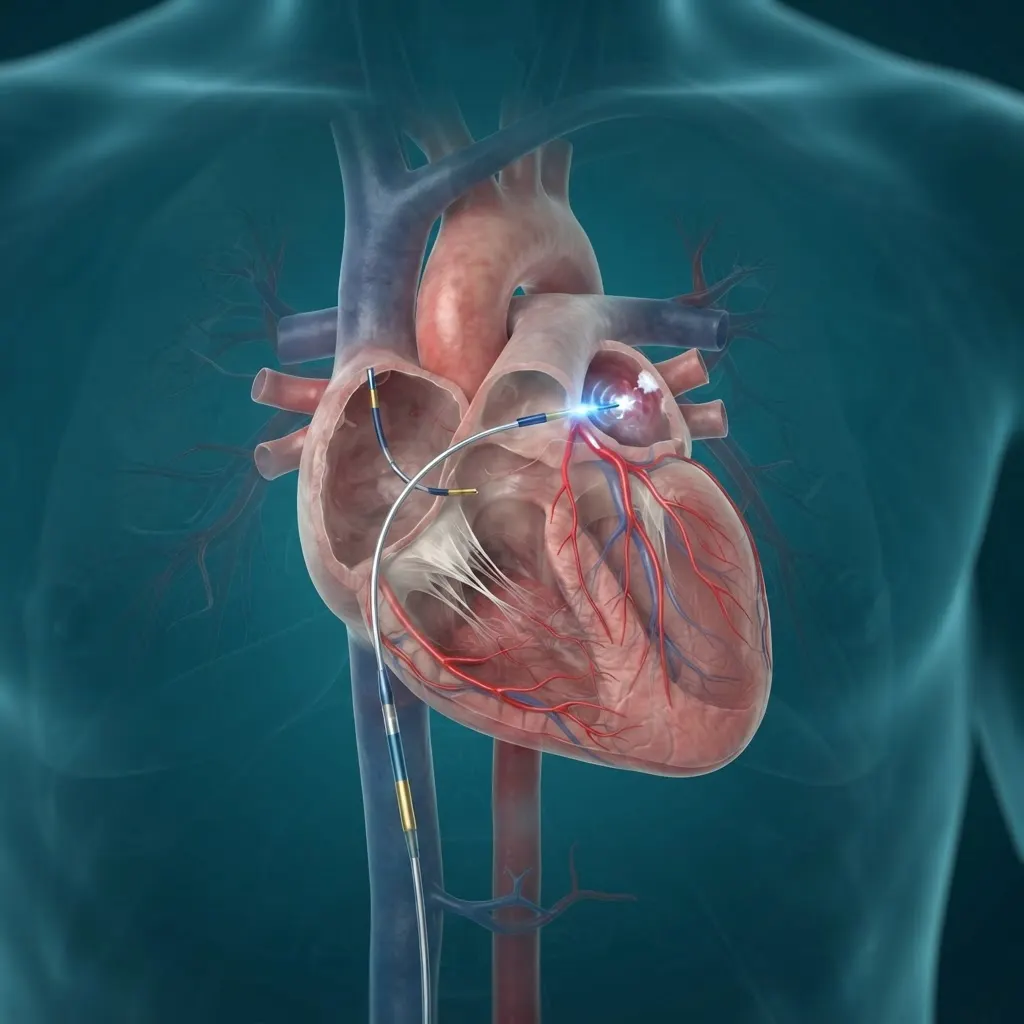
Ventricular Tachycardia Ablation
Ventricular tachycardia ablation in India with electrophysiology assessment, 3D mapping and catheter ablation for selected recurrent or symptomatic VT after stabilization.
Related Conditions
Our services are FREE and by using our services your hospital bill does not increase!
About Ventricular Tachycardia Ablation
Ventricular tachycardia (VT) ablation in India is a catheter-based electrophysiology procedure used to treat selected patients with recurrent or symptomatic ventricular tachycardia arising from abnormal electrical circuits in the heart. It may be considered for idiopathic VT or VT associated with scar from prior heart attack, cardiomyopathy or other structural heart disease. Patients with unstable sustained VT, fainting, shock or cardiac arrest need immediate emergency care where they are located rather than planned medical travel.
Before ablation, patients usually undergo an electrophysiology assessment with ECG, echocardiography and review of prior rhythm recordings or ICD data. Cardiac MRI, CT, coronary assessment or other testing may be added to define scar, anatomy and the underlying heart condition. Antiarrhythmic medicines and implantable-cardioverter defibrillator (ICD) therapy are reviewed as part of the overall plan.
During the procedure, catheters are used to map the arrhythmia and deliver energy to the responsible tissue. Three-dimensional electroanatomical mapping is commonly used, and some complex scar-related cases require epicardial access in addition to endocardial ablation. Ablation can reduce VT burden, but it does not necessarily replace an ICD in patients who still need protection from life-threatening arrhythmias.
The cost of VT ablation in India depends on mapping complexity, endocardial versus epicardial approach, anaesthesia, hospital stay, imaging and any device-related care.
India offers access to cardiac electrophysiologists and tertiary EP centres with advanced mapping, intracardiac imaging and intensive cardiac support. Medical Help India can connect medically stable patients with a suitable healthcare partner whose team can review ECGs, imaging and device records and advise on appropriate next steps.
What's Included
Why consider treatment in India?
Access to experienced specialists
Advanced treatment and diagnostic options
More affordable hospital care
Shorter waiting times for treatment
Help comparing hospitals, plans and costs
Support with appointments, travel and follow-up
Cost in India
USDFinal costs depend on the medical assessment, hospital, room category and clinical needs.
How it works
Share your details
Tell us about your health concerns, age and current location.
Receive a call
We call you to discuss your situation, needs and questions.
Receive a treatment plan
Get information about the most suitable treatment plan, hospital and estimated cost.
Choose your plan
Review the options and agree on your care and travel plan.
Get full support
Receive full support throughout every stage of your care journey.
Receive care in India
Receive your planned care with support throughout your stay.
Top Hospitals for Ventricular Tachycardia Ablation
View All Hospitals →

Top Doctors for Ventricular Tachycardia Ablation
View All Doctors →
Frequently Asked Questions
How much does Ventricular Tachycardia Ablation cost in India?
Cost depends on arrhythmia complexity, 3D mapping, endocardial versus epicardial approach, anaesthesia, hospital stay and any device-related care. Complex scar-related VT may require a more resource-intensive procedure.
Which medical reports are useful to have ready for Ventricular Tachycardia Ablation?
Have ready: ECGs and rhythm strips, Holter or device recordings, echocardiography, cardiac MRI or CT if available, prior ablation reports and ICD interrogation records. Include current antiarrhythmic medicines and the underlying heart diagnosis.
Who may be considered for VT ablation?
Ablation may be considered for selected patients with recurrent or symptomatic ventricular tachycardia, including idiopathic VT and scar-related VT associated with structural heart disease.
What is the difference between endocardial and epicardial VT ablation?
Endocardial ablation treats arrhythmia tissue from inside the heart, while epicardial ablation accesses the outer heart surface. Some scar patterns require one or both approaches.
Can VT ablation replace an ICD?
Not necessarily. Ablation can reduce VT burden, but patients at ongoing risk of life-threatening ventricular arrhythmias may still need an implantable defibrillator.

Our services are FREE
We connect you with leading hospitals and specialists in India. You pay the hospital directly.