
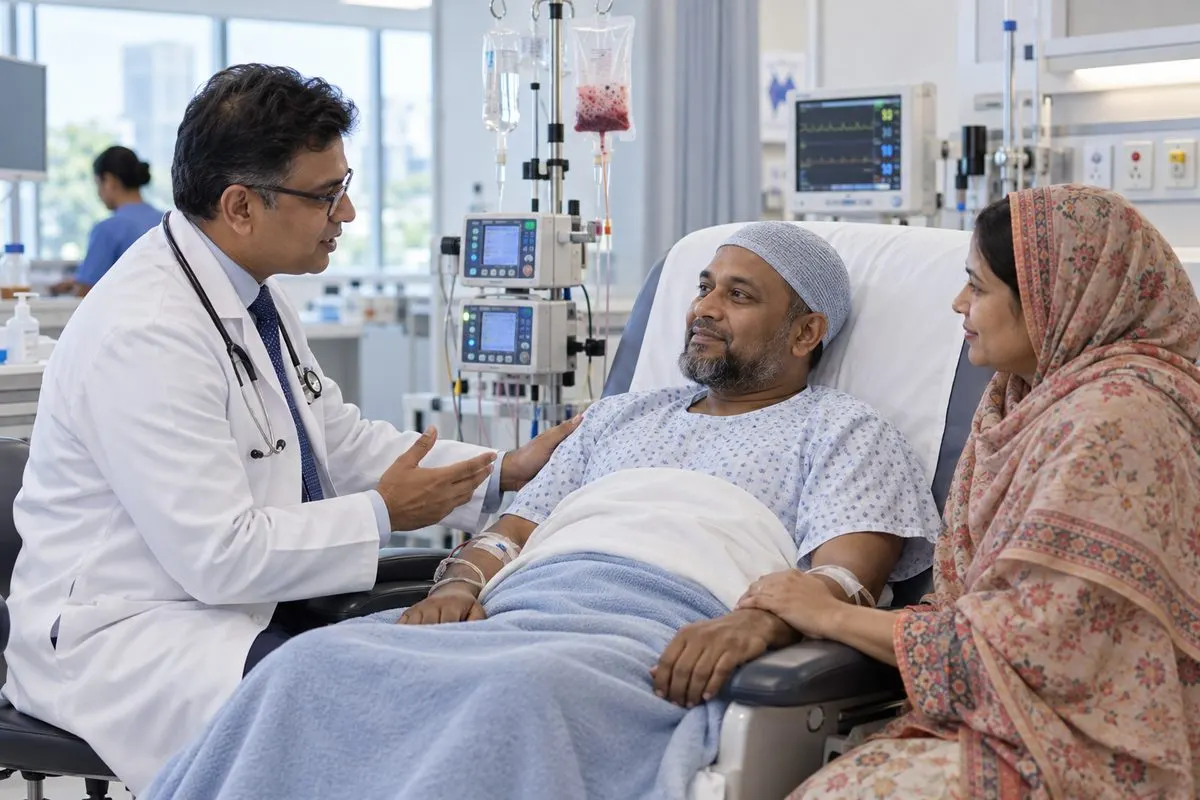
Post Transplant Monitoring
Post-transplant monitoring in India after stem-cell or bone-marrow transplantation, covering engraftment, infection, GVHD, relapse surveillance and immune recovery.
Наши услуги БЕСПЛАТНЫ, и ваш счёт в больнице от этого не увеличивается!
Post Transplant Monitoring: общие сведения
Post-transplant monitoring in India is structured follow-up after haematopoietic stem-cell or bone-marrow transplantation to detect complications early, assess engraftment and track immune recovery. Monitoring is especially intensive during the first weeks and months after transplant but may continue long term because infection risk, graft-versus-host disease (GVHD), relapse and late treatment effects can evolve over time.
Follow-up is individualized according to the underlying disease, donor type, conditioning regimen and transplant course. It commonly includes complete blood counts, kidney and liver tests, immunosuppressive-drug monitoring, infection surveillance and assessment for acute or chronic GVHD. Chimerism studies, bone-marrow examination, molecular or measurable residual disease testing and disease-specific imaging may be scheduled when clinically appropriate. Vaccination is usually restarted according to a transplant-specific schedule once immune recovery is adequate.
Patients and caregivers should be taught warning signs such as fever, new rash, persistent diarrhoea, jaundice, breathing difficulty or unusual bleeding. Fever after a recent transplant can represent a medical emergency and requires prompt contact with the transplant team. Immunosuppressive medicines and antimicrobial prophylaxis should be adjusted by specialists rather than stopped independently.
Cost in India depends on the frequency of specialist reviews, laboratory and molecular tests, drug-level monitoring, transfusions, infection treatment and any readmission required. Leading transplant centres provide haematologists, infectious-disease support, transfusion medicine, pathology and dedicated transplant units. Medical Help India can connect international patients with an appropriate transplant healthcare partner to review previous transplant records, define a follow-up schedule and provide an individualized monitoring estimate.
Что входит
Почему стоит рассмотреть лечение в Индии?
Доступ к опытным специалистам
Современные методы лечения и диагностики
Более доступная стоимость лечения в больнице
Более короткие сроки ожидания лечения
Помощь в сравнении больниц, планов лечения и стоимости
Помощь с записью, поездкой и последующим наблюдением
Стоимость в Индии
USDИтоговая стоимость зависит от результатов медицинского обследования, больницы, категории палаты и медицинских показаний.
Как это работает
Оставьте свои данные
Расскажите, что вас беспокоит, сколько вам лет и где вы сейчас находитесь.
Мы вам позвоним
Мы звоним вам, чтобы обсудить вашу ситуацию, потребности и вопросы.
Получите план лечения
Получите информацию о наиболее подходящем плане лечения, больнице и ориентировочной стоимости.
Выберите план
Изучите варианты и согласуйте план лечения и поездки.
Получите полную поддержку
Получайте полную поддержку на каждом этапе лечения.
Пройдите лечение в Индии
Пройдите запланированное лечение при поддержке на протяжении всего пребывания.
Post Transplant Monitoring: ведущие больницы
Все больницы →
Часто задаваемые вопросы
How much does Post Transplant Monitoring cost in India?
Cost depends on how often transplant reviews are required, blood and molecular tests, chimerism or marrow studies, drug-level monitoring, transfusion support, infection treatment and any readmission. Early post-transplant follow-up is usually more intensive and costly than stable long-term surveillance.
Which medical reports are useful to have ready for Post Transplant Monitoring?
Have ready: the transplant summary with transplant date, diagnosis, donor type and conditioning regimen, recent blood counts and organ-function tests, current immunosuppressive and antimicrobial medicines, infection-monitoring results and any GVHD records. Include chimerism, marrow or molecular disease-monitoring results and details of recent admissions or complications.
What is monitored after a stem-cell transplant?
Follow-up commonly includes blood counts, kidney and liver function, infection surveillance, immunosuppressive-drug levels and assessment for graft-versus-host disease, with disease-specific relapse monitoring added when appropriate.
How long is post-transplant monitoring needed?
Monitoring is most intensive in the first weeks and months but continues long term because immune recovery, chronic GVHD, relapse and late treatment effects can develop later.
Which symptoms after transplant need urgent medical advice?
Fever, new rash, persistent diarrhoea, jaundice, breathing difficulty, unusual bleeding or rapid clinical deterioration require prompt contact with the transplant team.
Наши услуги бесплатны
Мы связываем вас с ведущими больницами и специалистами Индии. Оплату вы вносите напрямую больнице.