
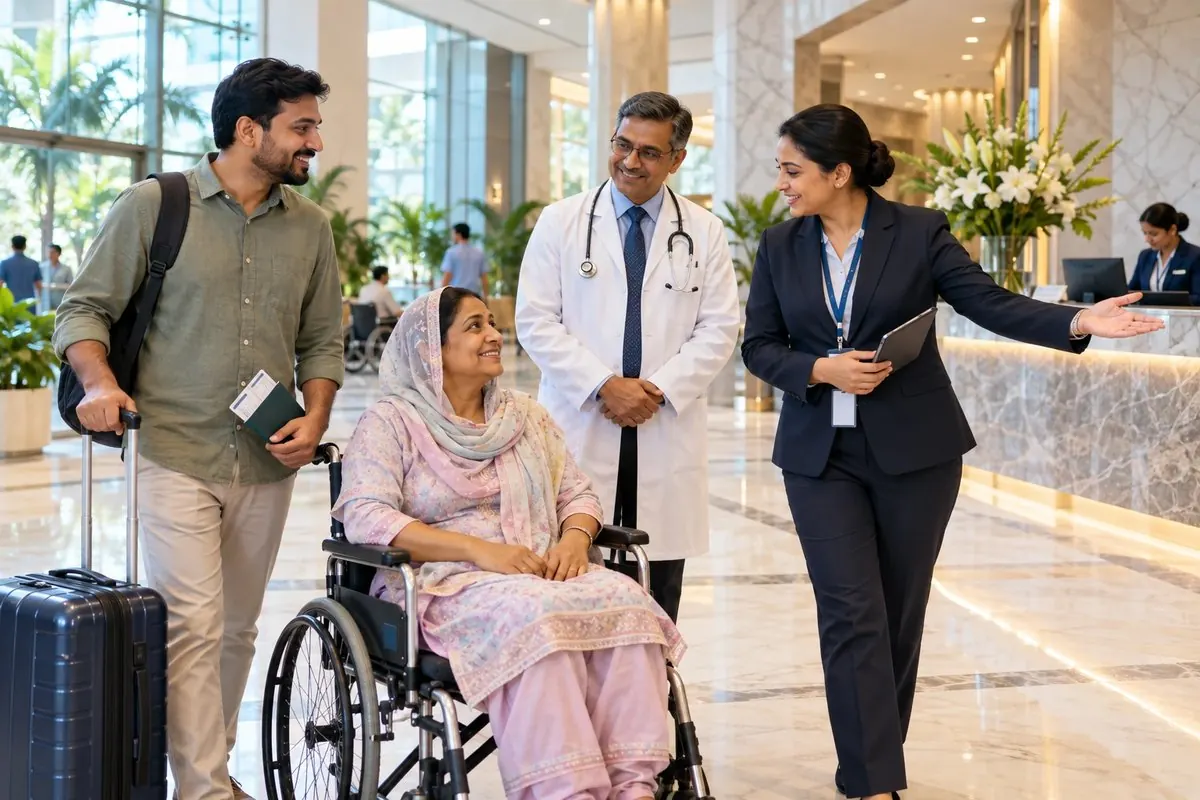
For many patients in Bangladesh, travelling to India for medical treatment starts with the same questions: which hospital to choose, how much treatment will cost, whether a medical visa is needed, which city to go to, and how to organise everything before travelling.
India is one of the most accessible international treatment destinations for Bangladeshi patients. Major hospitals treat international patients across cardiology, cancer care, orthopaedics, neurosurgery, organ transplantation, fertility treatment, ophthalmology and other specialties.
The right hospital depends on the diagnosis, the specialist required and the treatment itself — not simply on the hospital brand or city.
This guide explains how to organise medical treatment in India from Bangladesh, from sending medical reports and comparing hospitals to visa preparation, travel and follow-up after returning home.
Our services are FREE and by using our services your hospital bill does not increase!
Quick answer
For most Bangladeshi patients, the process should begin before travelling to India.
- Send your medical records to the relevant hospital or specialist
- Receive an initial medical opinion and find out whether more tests are needed
- Request a treatment estimate before making travel arrangements
- Confirm the exact hospital branch and doctor
- Arrange the correct medical visa
- Plan travel, accommodation and a companion if needed
- Keep enough time for tests and possible changes to the treatment plan after arrival
What treatments do Bangladeshi patients travel to India for?
Patients from Bangladesh travel to India for both complex treatment and specialist second opinions. Common areas include:
- Heart treatment — CABG, heart valve surgery, angioplasty, pacemakers, TAVI and congenital heart procedures
- Cancer treatment — cancer surgery, chemotherapy, radiation therapy, proton therapy, bone marrow transplantation and selected CAR-T treatment
- Orthopaedics — knee replacement, hip replacement, spine surgery and complex joint treatment
- Neurology and neurosurgery — brain tumours, spine conditions and other neurological disorders
- Transplantation — liver and kidney transplantation for eligible patients
- Fertility treatment — IVF and other reproductive treatments
- Eye treatment — cataract surgery and specialist ophthalmology
The appropriate specialist depends on the exact diagnosis. For example, a patient with heart disease may need a cardiologist, interventional cardiologist or cardiac surgeon, while a cancer patient may need medical oncology, surgical oncology, radiation oncology or several specialists working together.
Step 1: Prepare your medical records
Before contacting a hospital, organise the medical information you already have. Useful records may include:
- diagnosis or referral letter
- discharge summaries
- recent blood tests
- pathology or biopsy reports
- CT, MRI or PET-CT reports
- DICOM imaging files where available
- ECG, echocardiogram or angiography for cardiac cases
- previous surgery reports
- chemotherapy or radiation records
- current medication list
- information about allergies
You do not need to have every possible document before beginning. A short clinical summary explaining the diagnosis, previous treatment and current problem can make it easier for an Indian specialist to understand the case.
Step 2: Find the right hospital and doctor
The hospital name alone is not enough. Large hospital groups may have several branches, and not every branch offers the same specialists, technology or treatment programmes.
Before travelling, confirm:
- The exact hospital branch
- The department that will treat the patient
- The doctor or specialist team
- Whether the required treatment is available at that branch
- Whether the case can be reviewed before travel
- The proposed appointment date
- Whether additional investigations will be required after arrival
Which Indian city should you choose?
There is no single best city for every patient. The destination should depend on the medical case.
Kolkata
Kolkata is often the most convenient Indian city for Bangladeshi patients because of its proximity and widespread use of Bengali. It may be practical for medical consultations, diagnostics, cardiology, angiography and angioplasty, ophthalmology, orthopaedics and general multispeciality treatment.
- Shorter journey from Bangladesh
- Bengali widely spoken
- Familiar food and culture
- Convenient for many patients travelling by air or land
Delhi and Gurugram
Delhi NCR has one of India's largest concentrations of major tertiary hospitals. Patients may consider Delhi or Gurugram for complex cardiac surgery, cancer treatment, bone marrow transplantation, neurosurgery, complex orthopaedics, transplantation and high-risk multidisciplinary cases.
Chennai
Chennai is often considered for advanced cardiac treatment, oncology, proton therapy, organ transplantation, orthopaedics and specialist surgery.
Mumbai
Mumbai has large multispeciality hospitals and specialist centres treating cancer, complex surgery, cardiology, transplantation and neurological conditions.
Bengaluru
Bengaluru is commonly considered for cancer treatment, bone marrow transplantation, orthopaedics, neurology and multispeciality care.
Step 3: Get a treatment plan and cost estimate
Before travelling, ask the hospital to review the available medical records and provide an initial plan where possible. The estimate should ideally explain what is included. Check for:
- Doctor consultation
- Surgery or procedure
- Surgeon and anaesthesia fees
- ICU if required
- Hospital room
- Medical devices or implants
- Investigations
- Medicines
- Blood products where relevant
- Expected hospital stay
The final plan may change after the patient arrives and is examined.
How much does medical treatment in India cost?
There is no single price for medical treatment in India because costs vary by diagnosis, hospital, doctor and complexity. Indicative examples may include:
| Treatment | Approximate planning range |
|---|---|
| Angiography | $600–$1,200 |
| Angioplasty | $1,800–$3,500 |
| CABG | $3,500–$6,500 |
| Knee replacement | $4,000–$8,000 |
| Hip replacement | $4,000–$8,500 |
| Cancer surgery | Often $4,000–$15,000+ |
| Radiation therapy | $3,000–$8,000 |
| Proton therapy | $15,000–$35,000 |
| Bone marrow transplant | $15,000–$30,000 |
| Cataract surgery | Varies by lens and technique |
| IVF | Varies by protocol and medication |
These are general planning ranges only. The final cost depends on the individual treatment plan.
Step 4: Indian medical visa for Bangladeshi patients
Bangladeshi patients travelling to India specifically for treatment should check the current medical visa route before making travel arrangements.
The current Indian system includes medical visa options for patients and attendant visa options for accompanying family members. The exact rules, eligibility and application process can change, so the latest official guidance should always be checked before applying — see our medical visa guide for the current process.
Documents commonly required may include:
- valid passport
- hospital appointment or invitation letter
- medical reports
- application form
- photographs
- additional supporting documents where required
The hospital letter should clearly identify the hospital and expected treatment or admission where required.
Can Bangladeshi patients use an e-Medical Visa?
Bangladesh is currently included in India's e-Visa eligibility system, which includes an e-Medical Visa and an e-Medical Attendant Visa. Current requirements should always be verified on the official Indian visa portals before applying.
The current system also allows medical attendants to apply separately in connection with the patient's medical visa, subject to the applicable rules.
Step 5: Translate important medical records
Medical reports from Bangladesh may contain Bangla text. Ask the receiving hospital which documents should be translated into English. Useful documents to translate may include:
- pathology reports
- discharge summaries
- imaging reports
- important specialist notes
- diagnosis summaries
Keep the Bangla originals together with the translated copies.
Bengali language support in India
Many Bangladeshi patients are comfortable speaking Bengali but may find complex medical discussions difficult in English or Hindi. Before confirming the appointment, ask whether the hospital can arrange Bengali-language support or interpretation. Interpretation can be particularly important for:
- Medical consent
- Anaesthesia assessment
- Discussion of surgery or treatment risks
- Medication instructions
- Discharge planning
A family member can help with everyday communication, but complex clinical explanations are better handled by trained hospital staff where available.
Step 6: Travel from Bangladesh to India
By air
Air travel is usually the simplest option for patients travelling to major Indian cities. Current airline schedules should be checked directly before booking. Dhaka has direct or connecting travel options to major Indian medical destinations such as Kolkata, Delhi, Chennai, Mumbai and Bengaluru.
Patients who need mobility assistance should request wheelchair support from the airline before travelling.
By land
Land travel can be practical for some patients, especially when travelling to Kolkata or eastern India. However, not every land crossing can necessarily be used with every visa type. Current authorised entry points and visa conditions should be checked before starting the journey — see our travel guide for more on planning the trip.
Before leaving Bangladesh
Use this checklist before departure.
- Indian hospital and branch confirmed
- Doctor or department confirmed
- Appointment date confirmed
- Hospital letter received
- Visa approved
- Passport details checked
- Medical records saved electronically
- Paper copies prepared
- Medicines packed in original labelled packaging
- Accommodation arranged
- Airport or land transfer planned
- Wheelchair assistance requested if needed
- Emergency hospital contact saved
Accommodation, food and daily expenses
Hospital treatment is only part of the total cost. Patients should also budget for:
- hotel, guesthouse or serviced apartment
- food
- local transport
- expenses for a companion
- medicines
- visa costs
- additional investigations
- longer stay if treatment takes more time than expected
For longer treatment, such as radiation therapy, transplantation or rehabilitation, accommodation can become a significant part of the total budget.
Returning to Bangladesh after treatment
Before leaving the hospital, collect all important documents required for continuing care at home.
- Final discharge summary
- Final diagnosis
- Operation or procedure report
- Pathology results where relevant
- Imaging and investigation results
- Medication list
- Follow-up schedule
- Wound-care instructions
- Rehabilitation instructions
- Advice on when the patient is safe to travel
If remote follow-up is planned, confirm how new test results should be sent to the Indian doctor. After returning home, share the Indian discharge documents with the treating doctor in Bangladesh.
Frequently asked questions
Why do Bangladeshi patients travel to India for medical treatment?
Patients may travel to India to access particular specialists, complex procedures, second opinions or treatment programmes that they want to compare outside Bangladesh. India is also geographically close and offers a large number of hospitals across many specialties.
Which city in India is best for Bangladeshi patients?
There is no single best city. Kolkata is particularly convenient because it is close to Bangladesh and Bengali is widely spoken. Delhi, Gurugram, Chennai, Mumbai and Bengaluru may offer a wider choice for certain specialised or complex treatments. The diagnosis should determine the destination.
Can I send my medical reports before travelling?
Yes. In many cases, the hospital or specialist can review available records before the patient travels. This can help clarify the relevant doctor, likely treatment, further investigations and estimated cost.
Do Bangladeshi patients need a medical visa for India?
Patients travelling specifically for medical treatment should use the appropriate Indian visa route applicable to their case. Visa rules can change, so check the latest official Indian visa information before applying.
Can a family member accompany the patient?
Yes, depending on the current visa rules. India has medical-attendant visa options connected with medical travel. Each traveller needs the appropriate permission.
Should medical reports be translated into English?
Ask the receiving hospital. An English clinical summary and translations of key pathology, imaging or discharge reports can be useful, while the original Bangla records should also be kept.
Can I travel to India by land for treatment?
Yes in some circumstances, but the visa must permit entry through the chosen border crossing. Check the current authorised entry points before travelling.
What should I get from the hospital before returning to Bangladesh?
Collect the discharge summary, procedure reports, prescriptions, important investigation results, medication instructions and follow-up plan. Also confirm when the patient is fit to travel and how future reports should be shared with the Indian team.
Sources and medical references
Not sure where to start?
You do not need to choose a hospital before asking for help. Start with your diagnosis and the medical records you already have.
Share your case and, with your consent, Medical Help India will connect you with relevant healthcare providers who can help coordinate suitable hospital and doctor options, appointments, travel support, admission and follow-up. Our service is free for patients and does not increase the hospital bill.