
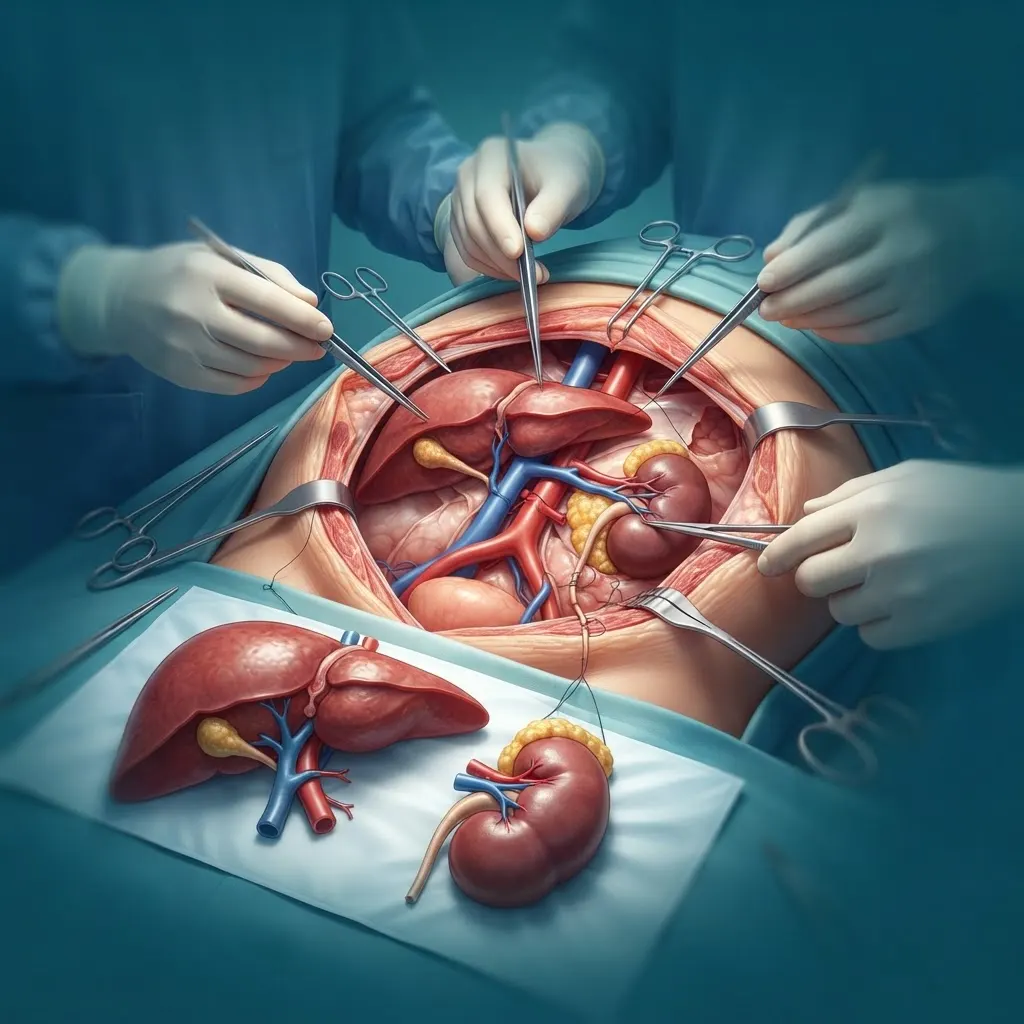
Small Incision Donor and Recipient Techniques
Small-incision donor and recipient transplant techniques in India for selected living-donor procedures, with full donor-safety standards, anatomical planning and specialist transplant care.
Наши услуги БЕСПЛАТНЫ, и ваш счёт в больнице от этого не увеличивается!
Small Incision Donor and Recipient Techniques: общие сведения
Small-incision donor and recipient techniques in India refer to minimally invasive or limited-incision approaches used in selected organ-transplant procedures, most commonly living-donor liver or kidney transplantation. The goal is to reduce surgical trauma and support recovery while preserving the same priorities as conventional transplant surgery: donor safety, secure vascular and biliary or urinary reconstruction and reliable graft function.
Suitability depends on donor and recipient anatomy, organ quality, previous abdominal surgery, body habitus and transplant complexity. Evaluation usually includes detailed blood testing, cross-sectional imaging, vascular mapping and multidisciplinary transplant assessment. In living-donor liver transplantation, teams assess graft volume and vascular and biliary anatomy carefully; in kidney transplantation, donor renal function and vascular anatomy are central to planning.
A smaller incision does not make transplantation minor surgery. Conversion to a larger incision may be necessary if exposure is inadequate or complications occur. Risks remain those of major transplant surgery, including bleeding, thrombosis, bile or urine leaks, infection, rejection and graft dysfunction. Donors require the same rigorous safety standards regardless of incision size, and recipient immunosuppression and long-term follow-up are unchanged by the cosmetic size of the incision.
Cost in India depends on the organ transplanted, donor and recipient work-up, surgical complexity, ICU and ward stay, blood products, immunosuppressive medicines and management of complications. Leading transplant hospitals provide experienced hepatobiliary or urological surgeons, transplant physicians, anaesthesia, interventional radiology, critical care and dedicated donor teams. Medical Help India can connect international patients with a suitable transplant healthcare partner to review imaging and records, confirm whether a limited-incision approach is appropriate and provide an individualized estimate.
Что входит
Почему стоит рассмотреть лечение в Индии?
Доступ к опытным специалистам
Современные методы лечения и диагностики
Более доступная стоимость лечения в больнице
Более короткие сроки ожидания лечения
Помощь в сравнении больниц, планов лечения и стоимости
Помощь с записью, поездкой и последующим наблюдением
Стоимость в Индии
USDИтоговая стоимость зависит от результатов медицинского обследования, больницы, категории палаты и медицинских показаний.
Как это работает
Оставьте свои данные
Расскажите, что вас беспокоит, сколько вам лет и где вы сейчас находитесь.
Мы вам позвоним
Мы звоним вам, чтобы обсудить вашу ситуацию, потребности и вопросы.
Получите план лечения
Получите информацию о наиболее подходящем плане лечения, больнице и ориентировочной стоимости.
Выберите план
Изучите варианты и согласуйте план лечения и поездки.
Получите полную поддержку
Получайте полную поддержку на каждом этапе лечения.
Пройдите лечение в Индии
Пройдите запланированное лечение при поддержке на протяжении всего пребывания.
Small Incision Donor and Recipient Techniques: ведущие больницы
Все больницы →
Small Incision Donor and Recipient Techniques: ведущие врачи
Все врачи →
Часто задаваемые вопросы
How much does Small Incision Donor And Recipient Techniques cost in India?
Cost depends on the organ transplanted, donor and recipient evaluation, CT or MRI vascular and anatomical mapping, surgical approach, ICU and ward stay, blood products, immunosuppressive medicines and management of complications. A limited incision does not remove the standard transplant costs or donor-safety requirements.
Which medical reports are useful to have ready for Small Incision Donor And Recipient Techniques?
Have ready: donor and recipient transplant evaluations, blood group and compatibility results, organ-function tests and cross-sectional imaging with vascular mapping. For living-donor liver transplantation include graft volumetry and biliary anatomy where available; for kidney transplantation include donor renal function and renal-vessel imaging. Also include previous abdominal surgery, infection screening and current medicines.
Does a smaller incision make living-donor transplant surgery less risky?
Not necessarily. A limited incision may reduce some aspects of surgical trauma in selected patients, but donor hepatectomy or nephrectomy and recipient transplantation remain major operations with the same requirements for vascular, biliary or urinary reconstruction and careful postoperative monitoring.
Who can be considered for a small-incision transplant approach?
Suitability depends on donor and recipient anatomy, organ size and quality, vascular and biliary or urinary anatomy, previous abdominal surgery, body habitus and the overall complexity of the transplant. Safety takes priority over incision size.
Can the surgeon convert to a larger incision during the operation?
Yes. If exposure is inadequate, anatomy is more complex than expected or bleeding or another complication occurs, the surgical team may enlarge the incision. Conversion is a safety decision rather than a treatment failure.

Наши услуги бесплатны
Мы связываем вас с ведущими больницами и специалистами Индии. Оплату вы вносите напрямую больнице.